Sonoran Desert Monsoon: 6 Breathtaking Storm Wonders
The driest land in North America receives a large share of its entire annual rainfall in just a handful of violent summer afternoons. Not gently. Not gradually. In towering thunderheads, walls of dust and floods that arrive faster than you can walk out of a dry riverbed.
This is the North American Monsoon — and in the Sonoran Desert, it is one of the most cinematic weather events on the planet.
What the Sonoran Desert Monsoon Actually Is
Every summer, the desert’s prevailing winds reverse. Instead of dry air sliding in from the west, moist air is pulled north, and it stacks into enormous thunderheads over sun-baked mountains and ochre plains.
The U.S. National Weather Service defines the official monsoon season as June 15 to September 30. Those fifteen weeks decide whether the desert thrives or thirsts.
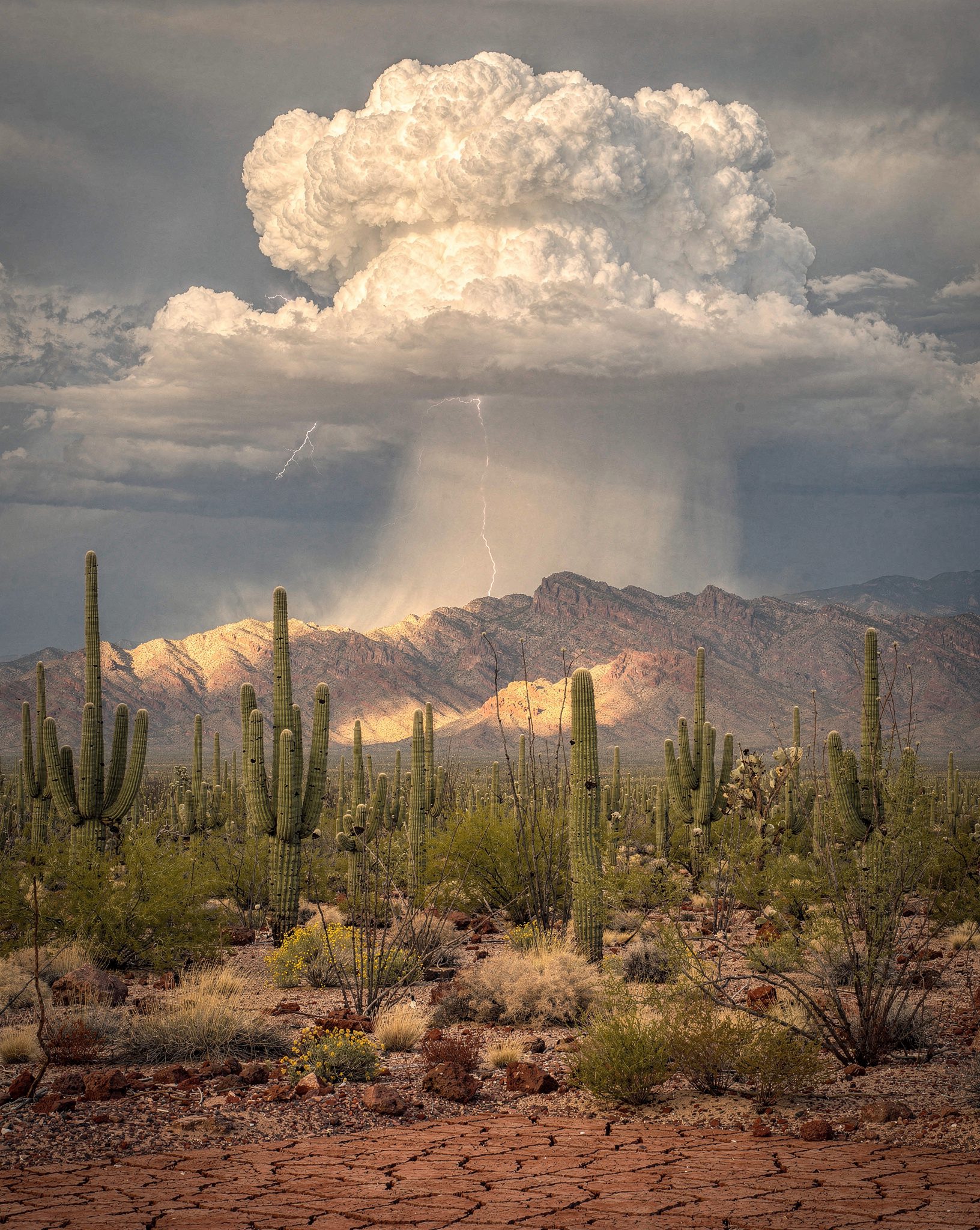
What makes it so photogenic is contrast. The Sonoran Desert is built from warm terracotta rock, olive-green creosote and pale dust — and then a blue-black storm ceiling drops over all of it.
A monsoon storm is not weather arriving from somewhere else. It is the desert building its own rain from its own heat.
Wonder 1: The Afternoon Build-Up
Monsoon storms run on a schedule. Mornings are often deceptively clear. Then the sun goes to work.
Sun-scorched desert mountains heat the air above them until it rises, cools, condenses — and stacks upward into cauliflower turrets of cloud. This is the classic build-up, and it typically peaks in the afternoon.
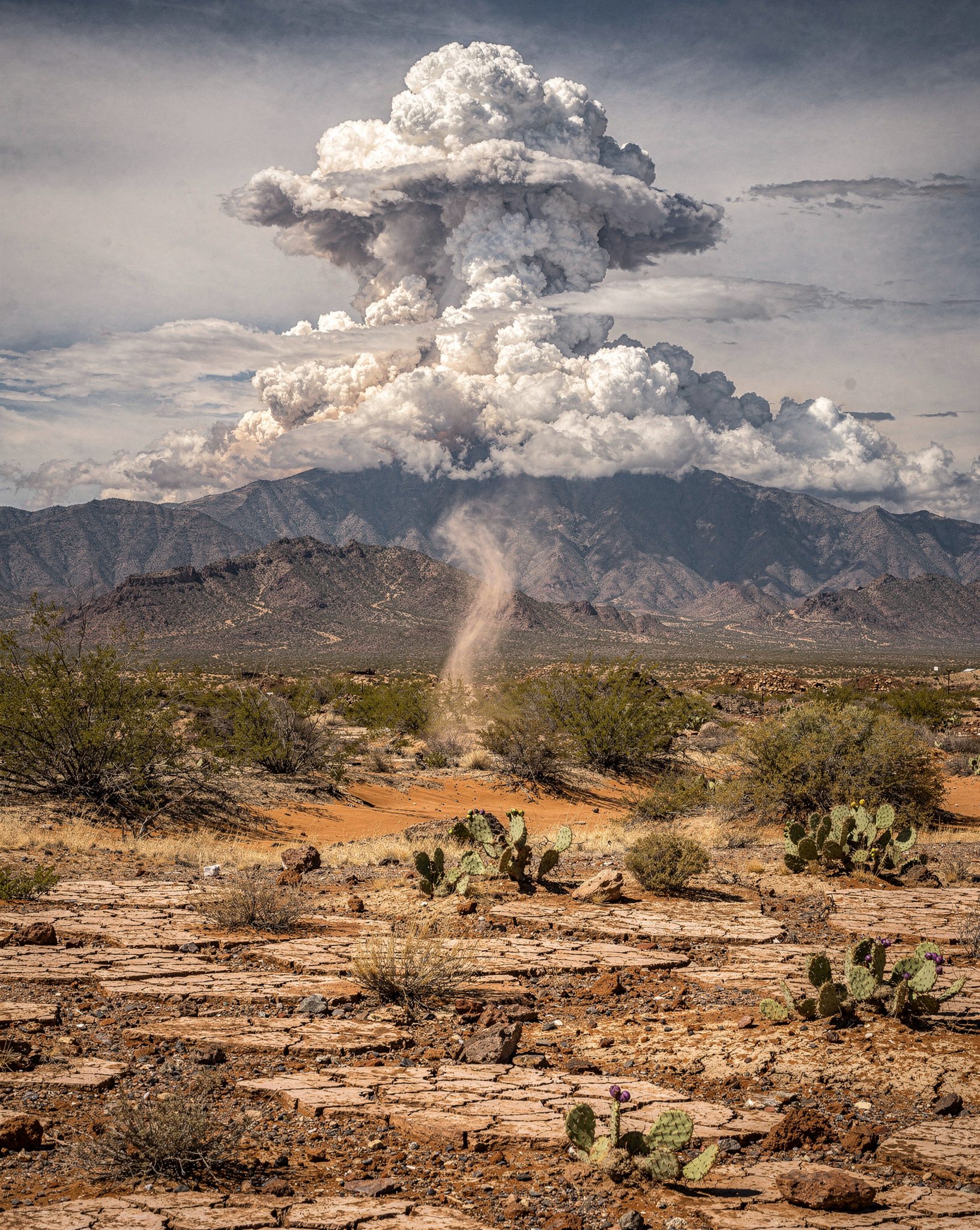
Watch it long enough and you see the storm being manufactured in real time. Turrets bubble, collapse and re-form. The engine that eventually soaks the desert is the desert’s own furnace-like heat.
What to look for in the sky
- Crisp, hard-edged cloud tops — a sign of powerful rising air
- Flattening anvil shapes — the storm has hit the top of its climb
- A darkening base — rain is forming and the light is about to change fast
Wonder 2: Virga — The Rain That Never Lands
Here is the counter-intuitive part of desert rain: much of it never arrives.
Virga is precipitation that evaporates in hot, dry air on the way down. It hangs from cloud bases as ghostly grey streaks, curving and combing sideways with the wind, fading into nothing above the ground.
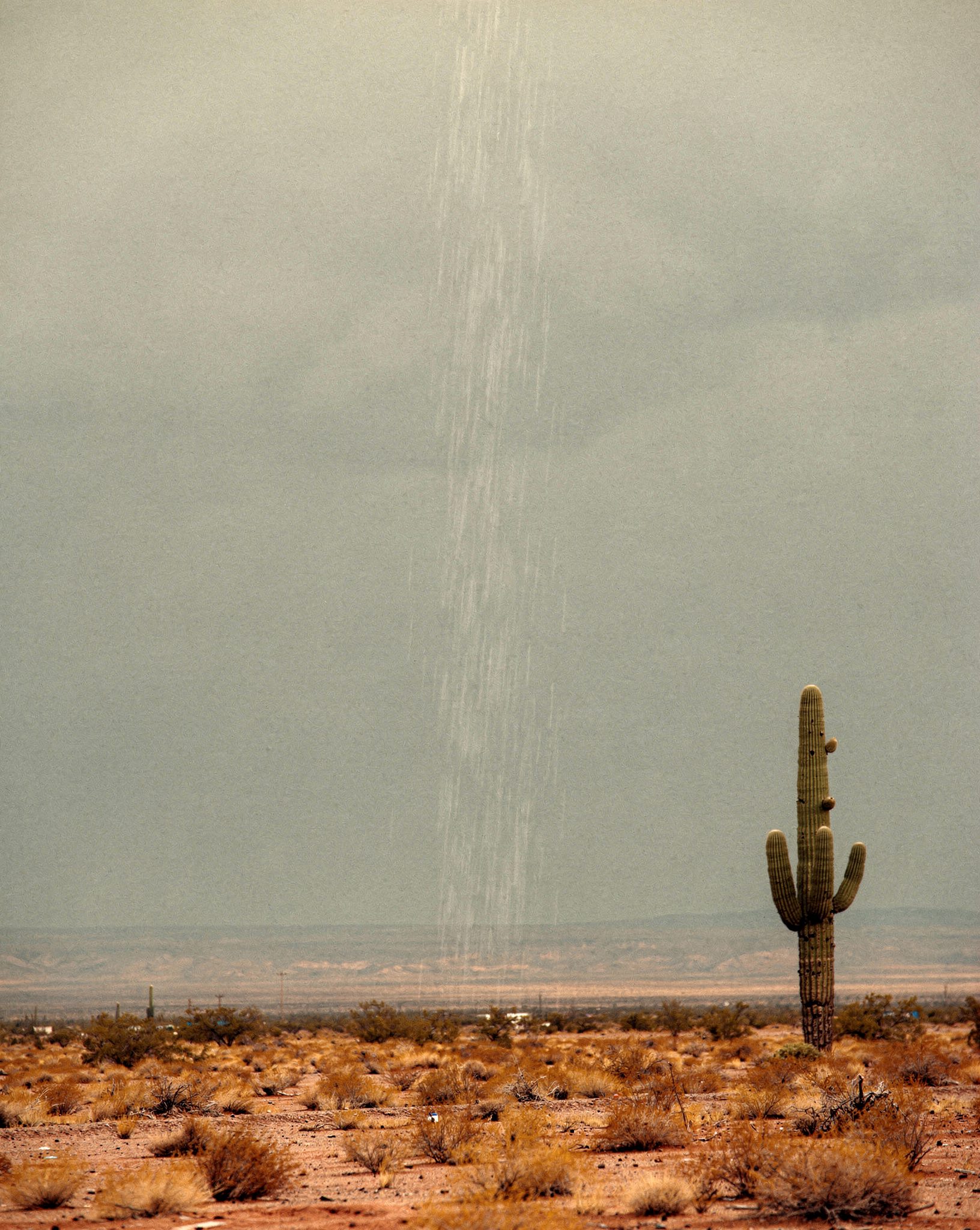
It is one of the most common — and most overlooked — monsoon phenomena in the Sonoran sky. Photographers love it because it turns a flat cloud deck into something with texture and drift.
For desert storm photography, virga is often the most reliable subject of the whole season. It appears when a full storm doesn’t, and it catches light beautifully in the hour before sunset.
Wonder 3: Water on Sun-Baked Clay
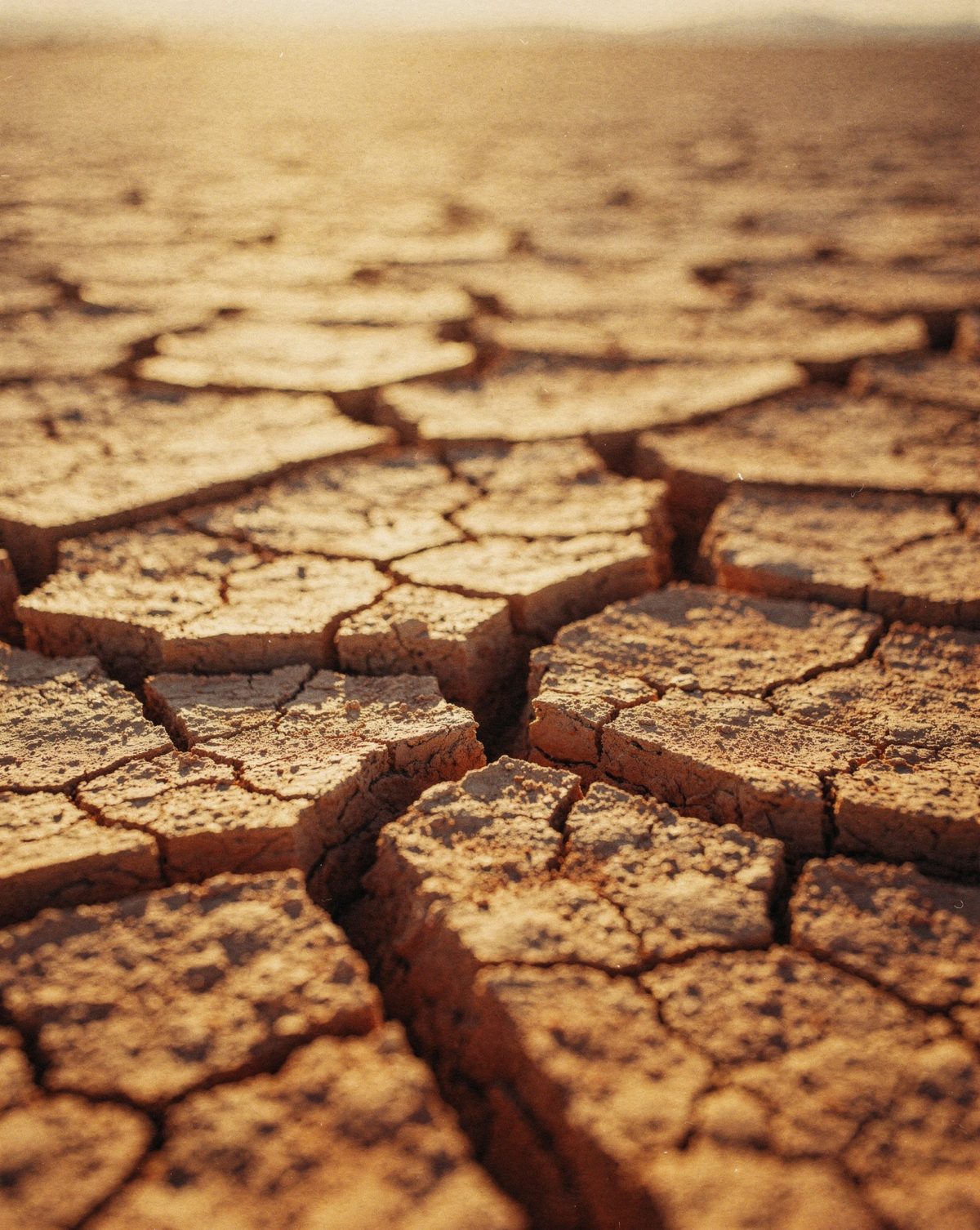
When the first drops finally land, the ground does something strange. Clay that has been baked hard by months of sun can repel water instead of absorbing it.
The rain beads, pools and runs. That single fact is why desert washes can flood within minutes of a storm — and why the danger is often kilometres away from where the rain is actually falling.
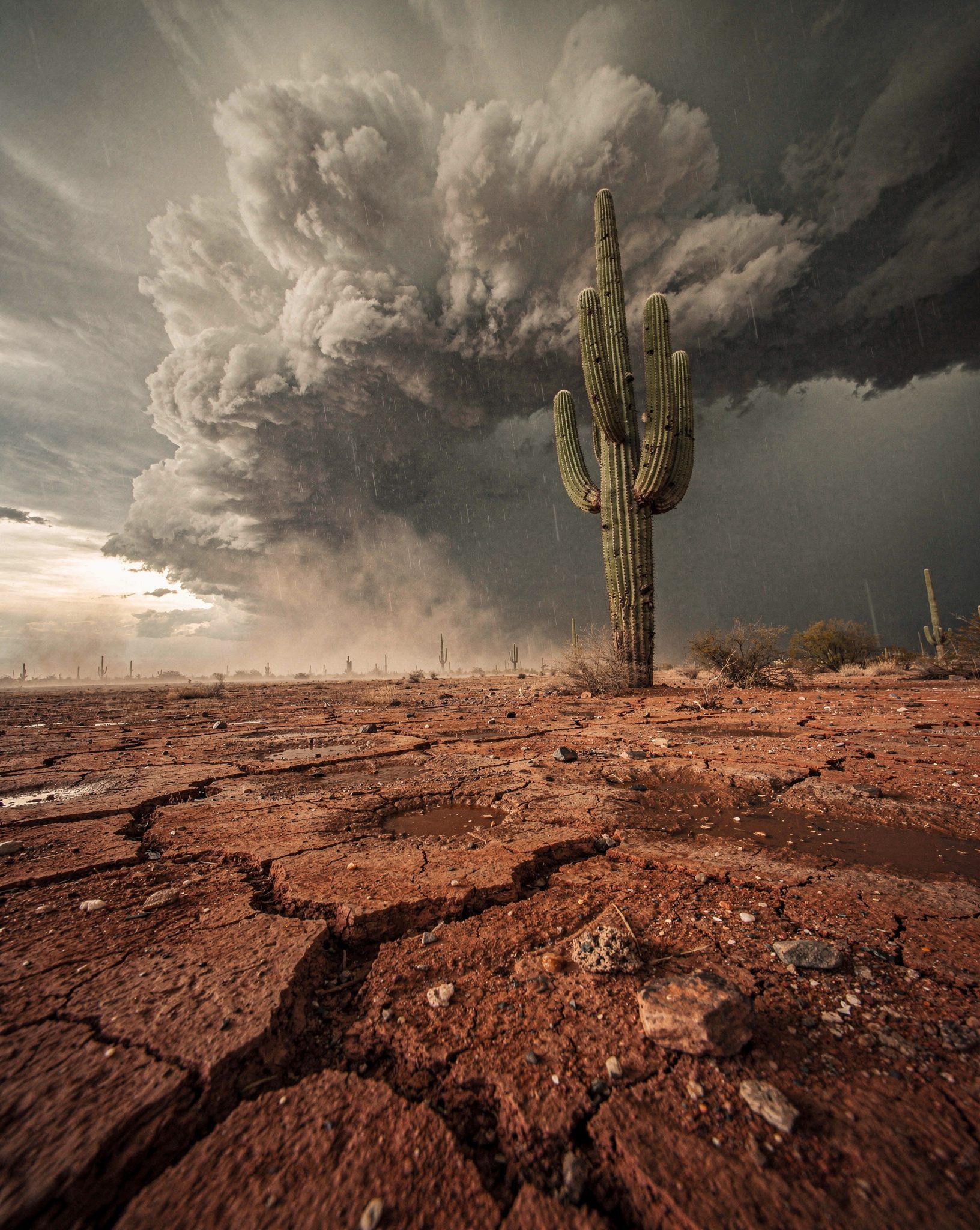
The saguaro does the opposite job
Above that dust, the desert’s most famous silhouette is built for absorption. A mature saguaro can soak up hundreds of gallons of water through shallow, wide-spreading roots.
Then it swells. The saguaro’s accordion-like ribs expand outward as the plant fills, letting it store the monsoon and live on it for months. It is a natural reservoir with spines.
The same storm that floods a wash in ten minutes can keep a cactus alive for a year.
Wonder 4: The Haboob
Before some monsoon storms bring rain, they push out a wall of dust. Air collapsing out of a thunderstorm hits the desert floor, spreads outward and lifts loose sediment into a moving curtain.
These dust walls are called haboobs, from the Arabic habb, meaning wind. In the Sonoran Desert they can tower thousands of feet above the valley floor.
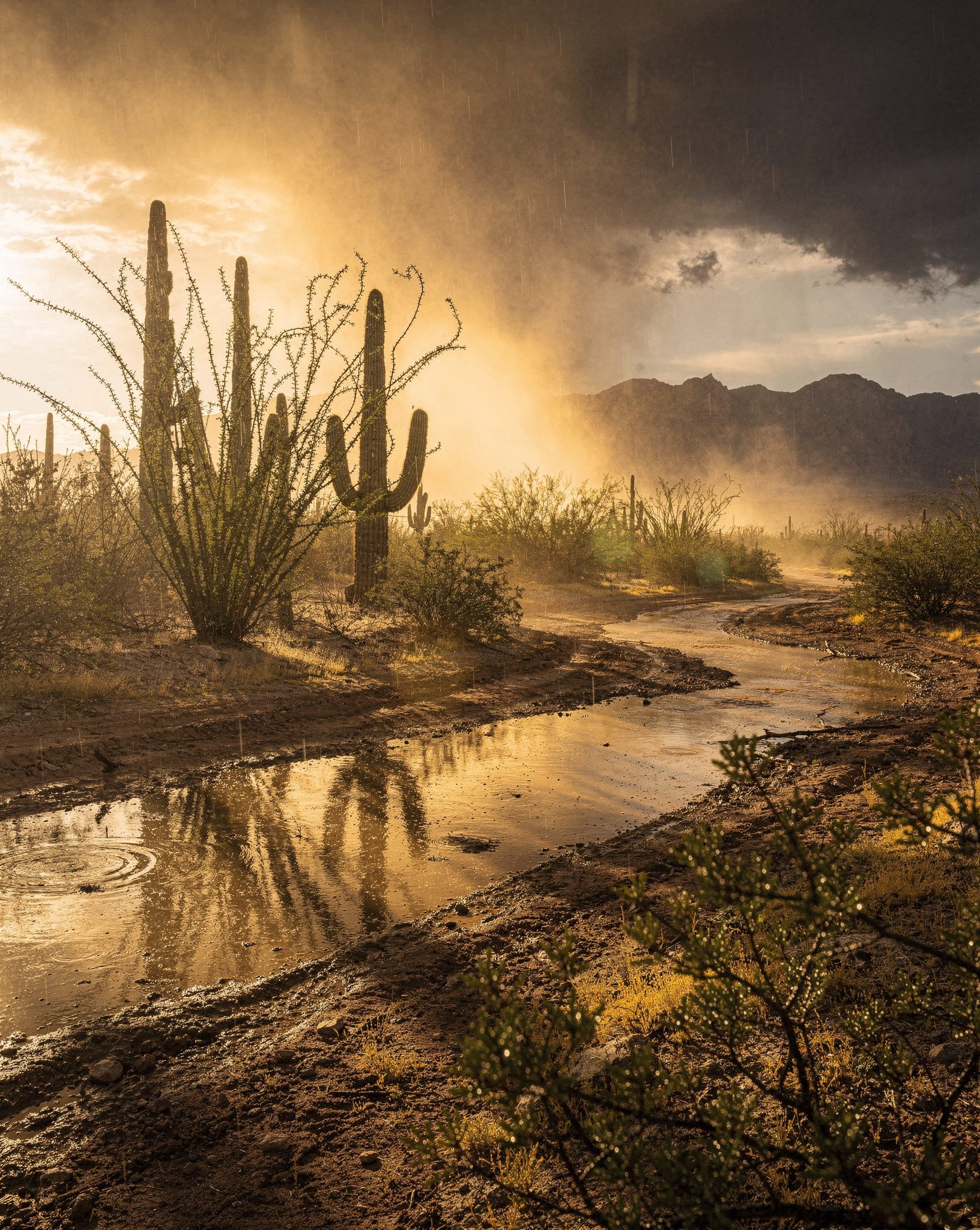
Seen from a distance, a haboob looks less like weather and more like geology in motion — a slow brown range advancing across the flats, swallowing mountains as it goes.
Why haboob light is unforgettable
- Suspended dust and moisture scatter low-angle sunlight
- The air turns a thick, uniform gold
- Shadows soften, distances flatten, and everything reads as one warm tone
This is the final act of a monsoon evening, and it is the reason so many desert images look like they were shot through amber.
Wonder 5: Petrichor
Ask anyone who lives in the Sonoran Desert what they remember about the monsoon, and they rarely start with lightning. They start with the smell.
Petrichor is the term coined in 1964 by Australian researchers Isabel Joy Bear and Richard Thomas for the scent released when rain meets dry earth. In the desert, where the ground has been waiting for months, it arrives with unusual force.
It travels ahead of the storm. Often you can smell rain long before a single drop reaches you — carried on the outflow winds from a storm still miles out.
Wonder 6: The Reset Button
After the storm, the desert holds water briefly in shallow pools across the clay. Reflections of cloud and rock sit on the surface as the light goes long and low.
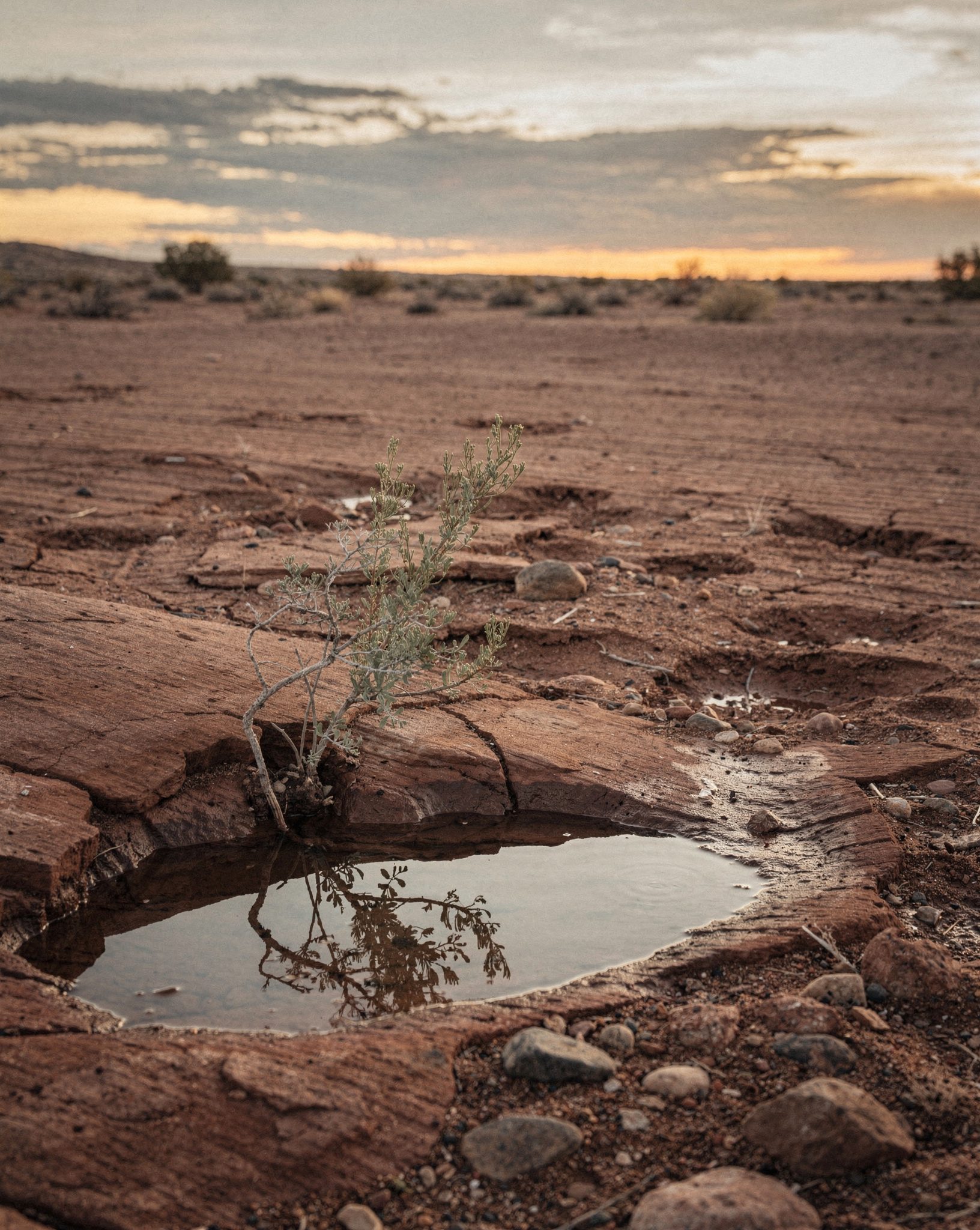
Within days those pools vanish. What replaces them is green — grasses, leaves and desert bloom triggered by moisture the landscape had been rationing for months.
That is the real wonder here. The Sonoran monsoon is not just a storm season. It is Earth’s most beautiful reset button.
Key Takeaways
- Season: officially June 15 to September 30, as defined by the U.S. National Weather Service
- Mechanism: reversing winds pull moist air north over the Sonoran Desert
- Timing: heat-driven build-up typically peaks in the afternoon
- Virga: rain that evaporates before landing — the most common overlooked spectacle
- Haboob: a towering dust wall, named from the Arabic habb (wind)
- Petrichor: named in 1964 — the scent of rain on dry earth
Conclusion
The Sonoran Desert monsoon compresses an entire hydrological year into a few violent, gorgeous weeks. Heat builds the clouds. Dry air erases half the rain. Hard clay turns the rest into flash floods. Dust turns the evening gold.
And then it smells like petrichor, and the desert turns green. Few natural wonders are this dramatic, this seasonal, or this generous with light.
Share This
If this changed how you see desert weather, send it to someone who loves storms, cactus country or long-lens landscape photography. Explore more natural wonders and cinematic visual journeys in our nature collection.