Digital Detox for Teens: 5 Research-Informed Habits That Can Help
If you’ve ever watched a teen reach for their phone the instant they wake up — and again the last thing before sleep — you already understand why digital detox for teens has become such an urgent conversation. Screens aren’t inherently bad, but the way many apps are designed can quietly hijack a developing brain’s reward system. The good news? Small, research-informed changes can help teens reclaim focus, calm, and real-world connection.
This guide breaks down five brain-backed habits that are practical enough to actually stick. No shame, no going cold turkey — just realistic steps grounded in psychology.
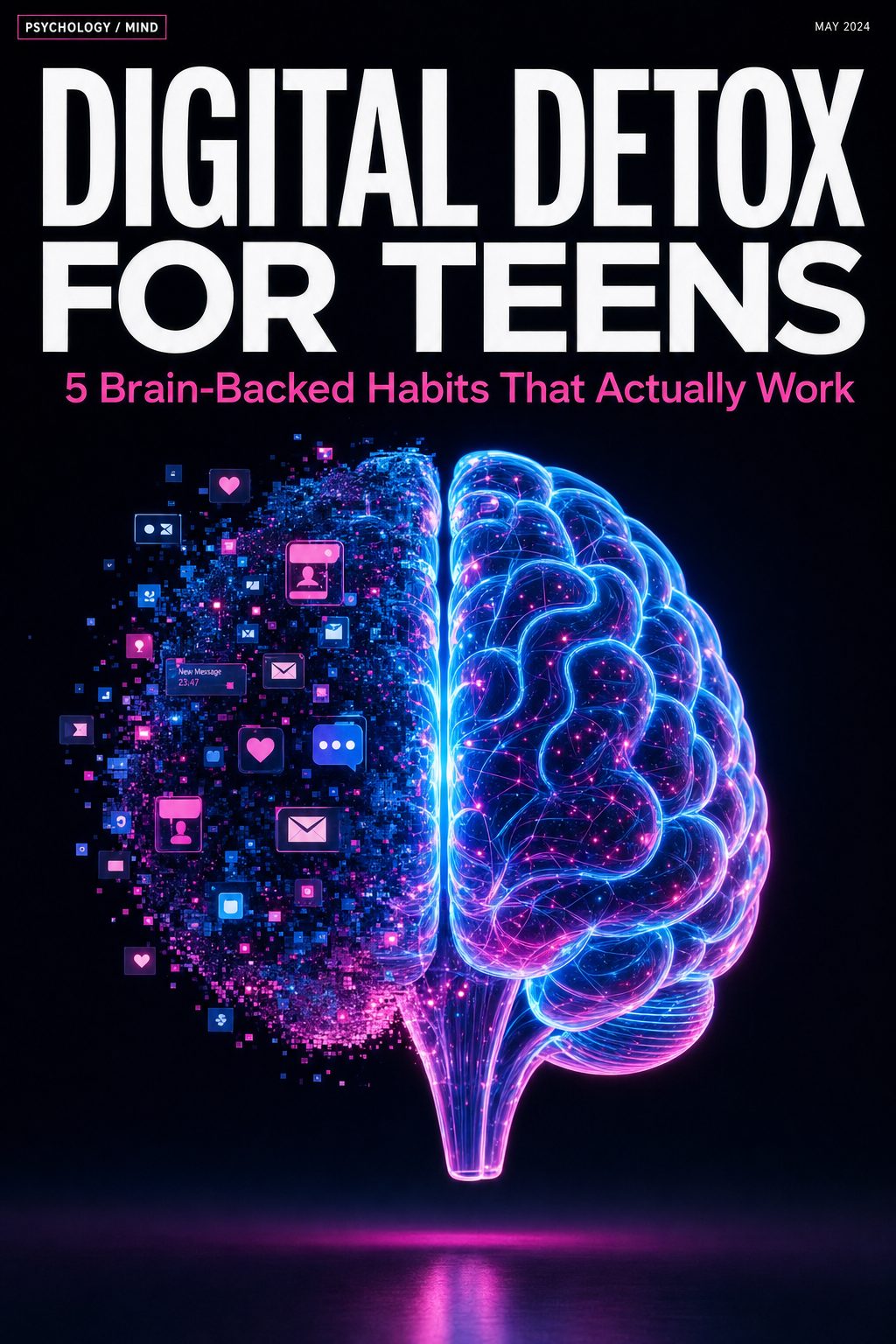
Why Teen Screen Time Deserves a Closer Look
Adolescence is a period of intense brain development, particularly in areas linked to attention, impulse control, and emotional regulation. Many popular apps use variable rewards — unpredictable likes, notifications, and endless content — which can encourage compulsive checking. Understanding the psychology of screen time is the first step toward change.
Rather than framing this as deprivation, think of managing screen time as restoration: giving the brain space to rest, focus, and connect offline. Below are five habits that support teen mental health without demanding perfection.
Habit 01: Keep Phones Out of the Bedroom

If you only change one thing, make it this one. Screen light — especially blue-toned light — can suppress melatonin, the hormone that signals your body it’s time to sleep. When phones stay in the bedroom, the temptation to scroll late into the night delays sleep and disrupts rest.
How to make it easier
- Set up a charging station outside the bedroom — in the kitchen or hallway.
- Use a traditional alarm clock instead of a phone alarm.
- Create a wind-down routine that doesn’t involve a screen, like reading or stretching.
Because sleep affects mood, memory, and focus, protecting it is arguably the single biggest lever for teen mental clarity.
Habit 02: Replace Infinite Scroll With Fixed Screen Windows
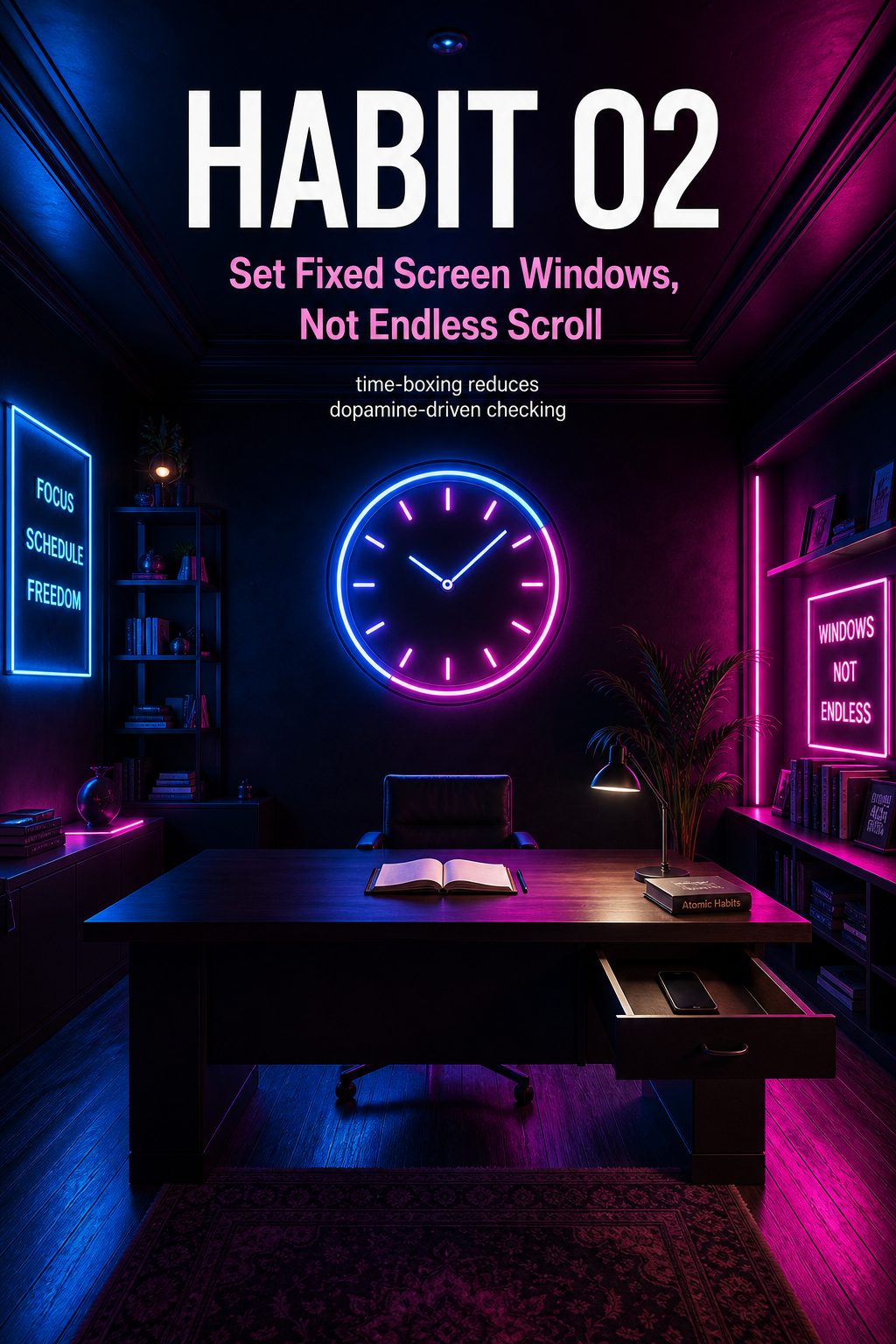
Infinite scroll is engineered to keep you going — there’s no natural stopping point, which feeds a loop of compulsive checking. One antidote is time-boxing: setting specific windows for social media and entertainment instead of grazing all day.
Try this approach
- Choose two or three set times per day for social apps (for example, after school and after dinner).
- Use a timer so the boundary is clear.
- Turn off non-essential notifications so your phone stops pulling you back.
Fixed windows help tame the dopamine-driven habit loop that keeps teens reaching for their phone without even deciding to. Over time, checking becomes a choice again — not a reflex. This is one of the most sustainable healthy phone habits to build.
Habit 03: Swap Passive Scrolling for a Hands-On Flow Hobby

Passive scrolling tends to leave people feeling restless and drained. Hands-on, absorbing activities do the opposite: they invite a state of deep engagement often called “flow,” where you lose track of time because you’re fully immersed.
Ideas for flow hobbies
- Drawing, painting, or journaling
- Playing a musical instrument
- Building, crafting, or cooking
- Sports and movement-based activities
Deep engagement can help lower anxiety and rebuild the attention span that constant task-switching erodes. The key is to pick something genuinely enjoyable — the goal isn’t productivity, it’s presence.
Habit 04: Engineer Your Phone Against Itself
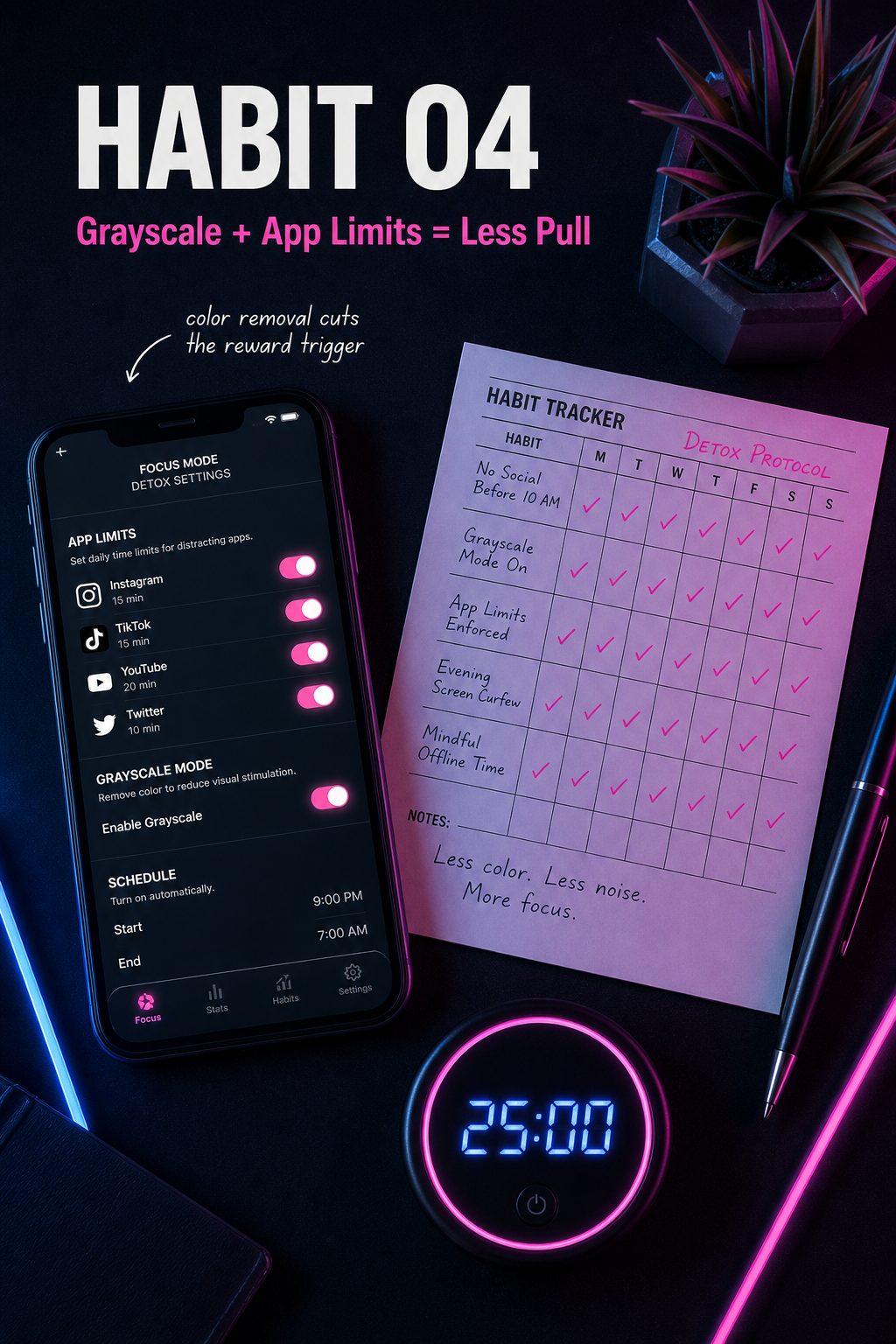
Sometimes the smartest move is to make your phone a little less appealing. Two simple tweaks can strip away the color-coded reward triggers designed to hijack attention.
Grayscale mode
Switching your screen to grayscale removes the vivid colors that make apps feel exciting and rewarding. A gray, muted interface is far less tempting to open on autopilot.
App limits
Most phones let you set daily time limits for specific apps. When the limit hits, you get a gentle nudge to stop — a built-in boundary that supports your own intentions. Together, grayscale and app limits make it easier to follow through on a dopamine detox without relying solely on willpower.
Habit 05: Reconnect Offline First
At its heart, a digital detox for teens isn’t about taking things away — it’s about making room for what matters most. Real-world connection, unhurried conversation, and time outdoors all nourish a developing brain in ways screens can’t replicate.
Small resets that add up
- Have at least one screen-free meal a day with family or friends.
- Take short walks without earbuds or a phone in hand.
- Prioritize face-to-face plans over group chats when possible.
Tiny, consistent resets are powerful precisely because they’re repeatable. The detox isn’t deprivation — it’s restoration. Reducing teen screen time in small, steady ways gives the brain daily opportunities to recover.
Putting It All Together
You don’t need to adopt all five habits at once. Start with the one that feels most doable — often, keeping phones out of the bedroom — and layer in others as they become routine. Progress, not perfection, is the goal.
Here’s a quick recap of the five research-informed habits:
- Keep phones out of the bedroom to protect sleep and melatonin.
- Use fixed screen windows to break the infinite-scroll loop.
- Adopt a hands-on flow hobby to rebuild focus and ease anxiety.
- Engineer your phone with grayscale and app limits.
- Reconnect offline first with small, consistent resets.
These strategies support teen mental health by working with the brain rather than against it. When managing screen time becomes a series of gentle habits rather than a battle of willpower, healthier patterns tend to last.
A Final Word for Teens and Parents
Change is easier when it’s collaborative. If you’re a parent, consider adopting these habits alongside your teen — shared boundaries feel fairer and more supportive. If you’re a teen, remember that wanting to feel more focused, rested, and connected is completely valid. The apps aren’t built to help you rest, so building your own healthy phone habits is an act of self-respect.
Start small, stay consistent, and give your brain the space it needs to thrive.