Wet-Bulb Temperature Explained: Why Heatwaves Feel Deadlier
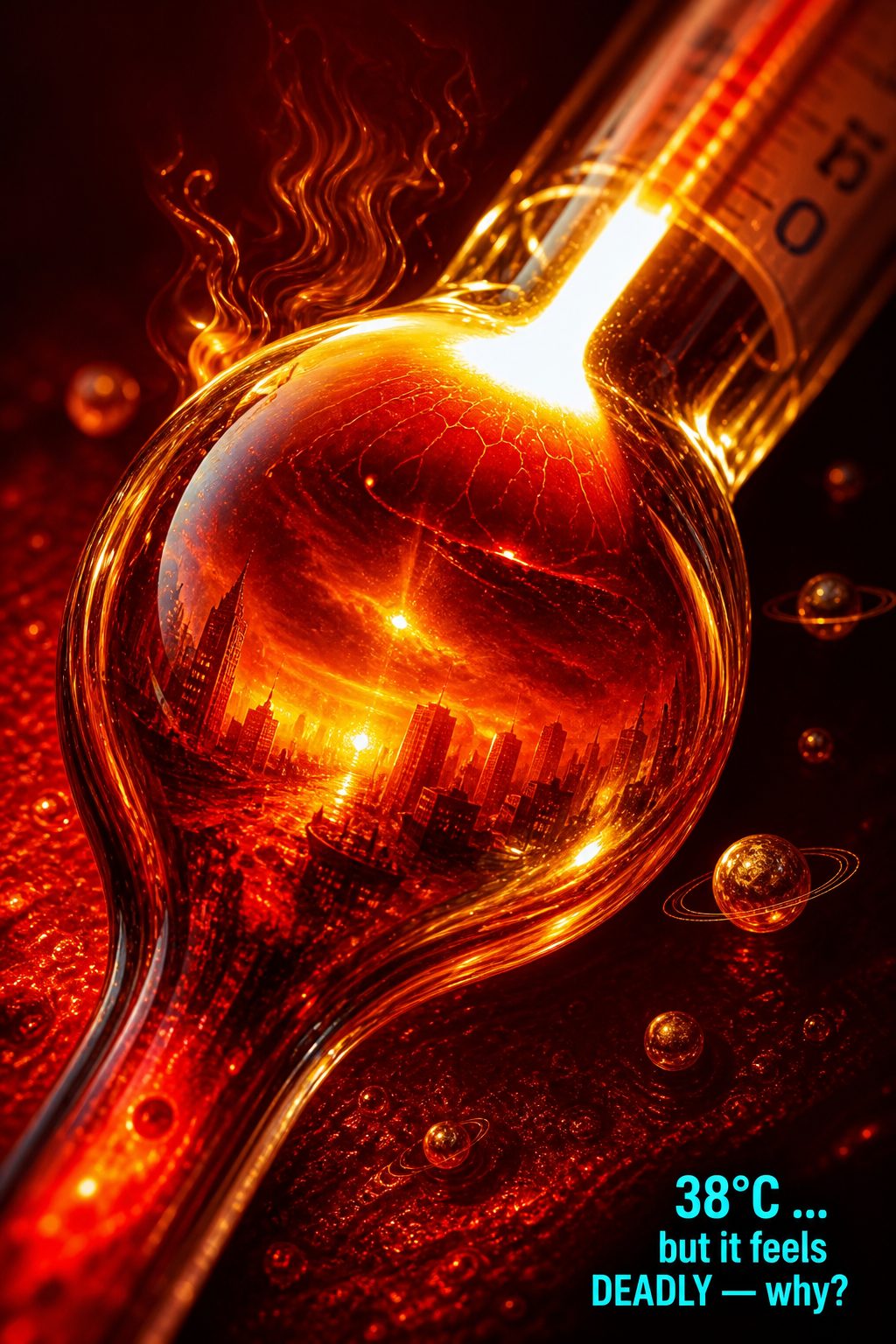
The thermometer reads 38°C, yet emergency rooms are overwhelmed and the death toll keeps climbing. If you’ve ever wondered why some heatwaves feel far more lethal than the number on the display suggests, the answer lies in a piece of physics most people have never heard of: wet-bulb temperature. This is the hidden metric that separates an uncomfortable summer day from a genuinely deadly one.
In this edition of our science explained series, we’ll break down the invisible forces behind modern heatwaves — from the limits of the human body to the way cities amplify heat — and reveal why the temperature you see is only half the story.
The Number You See vs. The Danger You Feel
Air temperature — the value your weather app shows — is measured by a standard “dry-bulb” thermometer shielded from moisture and direct sunlight. It’s useful, but incomplete. It tells you how hot the air is, not how hard it is for your body to stay cool.
Your body has a remarkable built-in cooling system: sweating. As sweat evaporates from your skin, it carries heat away, keeping your core temperature stable. This process works beautifully in dry air. But the moment humidity rises, everything changes — and that’s where heatwave science gets genuinely frightening.
Why Humidity Turns Heat Deadly
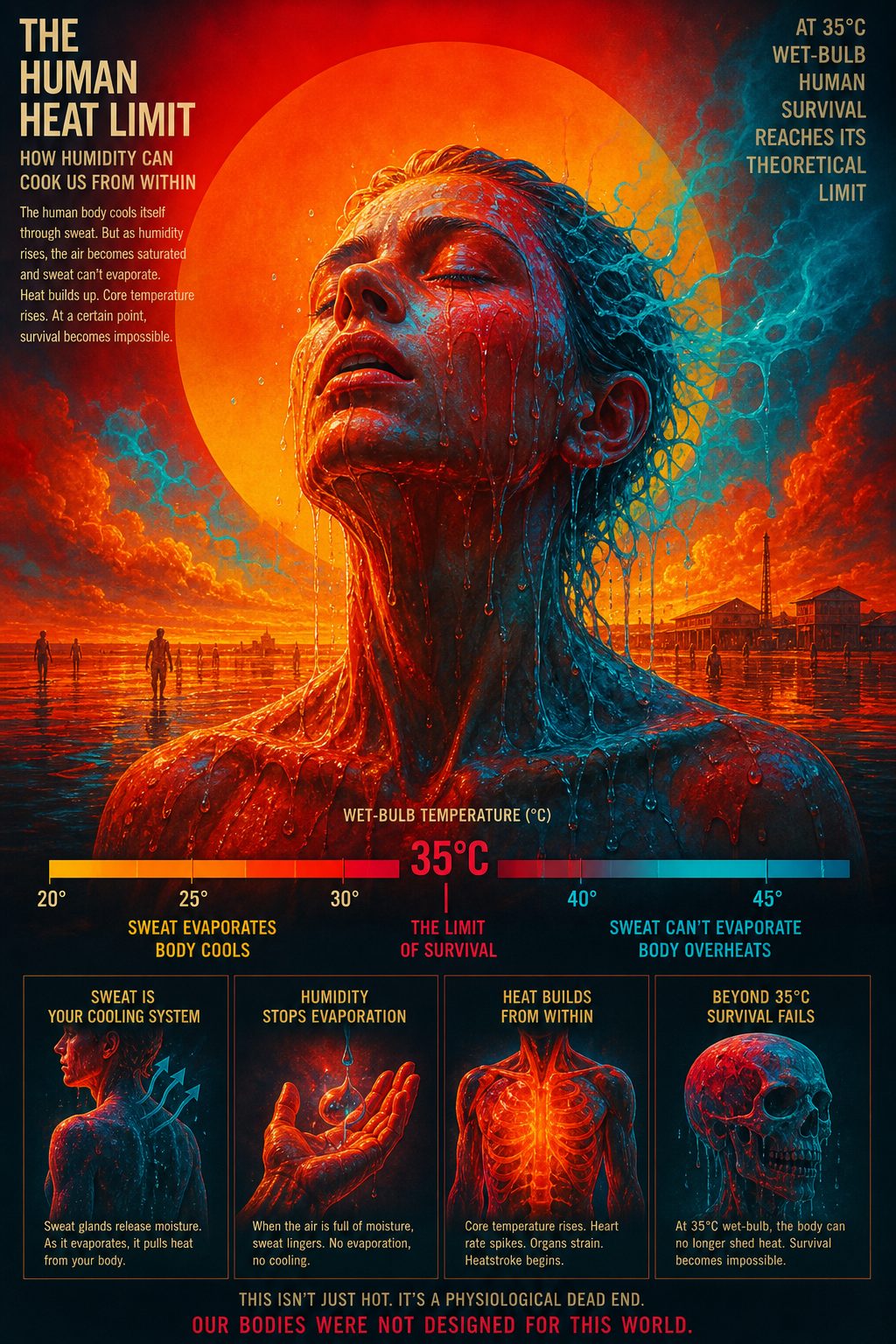
Here’s the crucial insight into humidity heat danger: when the surrounding air is already saturated with moisture, sweat can no longer evaporate efficiently. Your primary cooling mechanism stalls. You keep sweating, but the water just sits on your skin instead of pulling heat away.
This is why a humid 35°C day can be more dangerous than a dry 42°C day. The wet-bulb temperature captures exactly this combination of heat and moisture — it measures the lowest temperature you could theoretically reach through evaporative cooling alone.
The 35°C Survival Limit
Scientists widely cite a wet-bulb temperature of 35°C as the theoretical human survival limit. At this threshold, the air is so hot and humid that sweat cannot evaporate at all. Your body loses its only defense against overheating — and no amount of shade, rest, or drinking water can save you. Beyond a few hours of exposure, even a healthy person in perfect condition would be at risk.
It’s important to understand what this number represents: it is a theoretical physiological ceiling. Serious harm and death can and do occur at wet-bulb temperatures well below 35°C, especially for the elderly, the ill, and the very young.
How Cities Make It Far Worse

Even if the countryside stays survivable, the picture inside a city can be dramatically different. This is the urban heat island effect — one of the most underappreciated factors in why heatwave deaths cluster in urban centers.
Concrete, asphalt, brick, and glass absorb solar radiation all day long and release it slowly through the night. Add in dense buildings that block airflow, waste heat from air conditioners and vehicles, and a lack of vegetation, and downtown areas can become significantly hotter than nearby rural land — with differences that can reach up to 14°C on the same day between shaded, green spaces and exposed concrete surfaces.
The Danger of the Sleepless Night
The urban heat island is especially cruel after dark. Rural areas cool down overnight, giving the body a chance to recover. But cities keep radiating stored heat, so nighttime temperatures stay dangerously elevated. Without that recovery window, the physiological strain accumulates day after day — which is precisely why the death toll tends to concentrate in city centers during prolonged heat events.
How Scientists Actually Measure Wet-Bulb Temperature
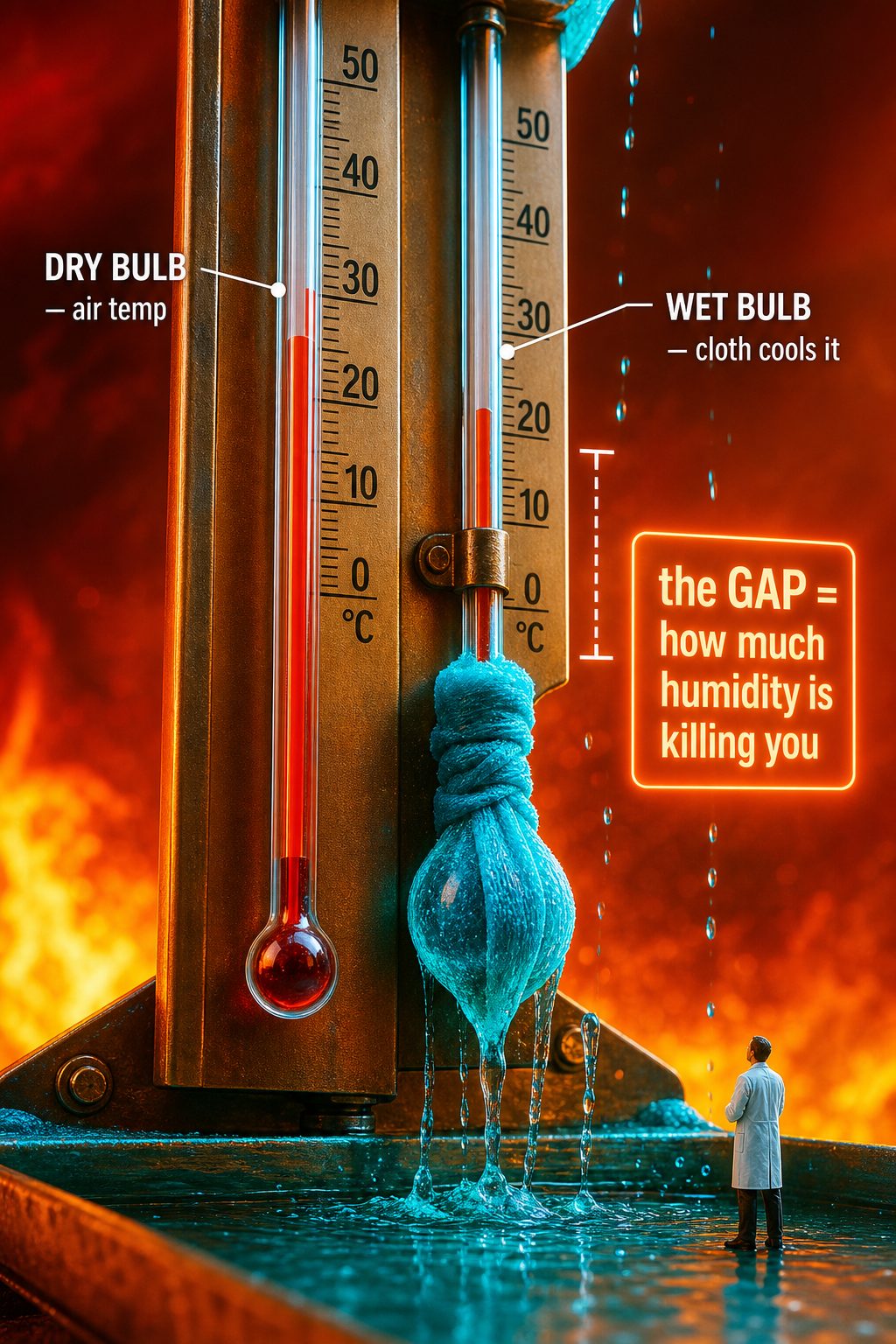
The method behind the measurement is elegantly simple. A thermometer bulb is wrapped in a wet cloth and exposed to moving air. As water evaporates from the cloth, it cools the thermometer — mimicking exactly what happens to your sweating skin.
The key is the gap between the two readings:
- A large gap between the dry-bulb (air) and wet-bulb temperatures means the air is dry, evaporation is strong, and your body can cool itself effectively. You’re relatively safe.
- A small gap means the air is humid and evaporation is weak. Your cooling capacity is compromised.
- No gap at all means the air is fully saturated — evaporation stops completely, and your body’s only defense against overheating vanishes.
This is why understanding why heatwaves feel hotter than the thermometer requires looking beyond that single dry-bulb number. The gap tells the real story of survival.
A Warming Planet Is Rewriting the Rules

The combination of rising global temperatures and increasing humidity means that dangerous wet-bulb conditions — once considered rare — are becoming more frequent. Across Europe, record-breaking heat events are no longer isolated anomalies but a recurring pattern, and the invisible physics of the wet-bulb temperature helps explain why each new heatwave carries greater risk than the raw numbers imply.
The three forces we’ve explored — the physiological limits of sweating, the amplifying power of urban heat islands, and a steadily warming climate — are quietly reshaping what “a hot day” actually means for human survival.
Key Takeaways: Reading the Heat Correctly
- The thermometer is only half the story. Air temperature ignores humidity, the single most important factor in how heat affects your body.
- Wet-bulb temperature is the true danger signal. A wet-bulb reading approaching 35°C represents the theoretical human survival limit, with serious harm occurring well below it.
- Humidity disables your cooling system. When sweat can’t evaporate, your body loses its primary defense against overheating.
- Cities intensify the threat. The urban heat island effect keeps downtown areas dangerously hot, especially at night.
- The trend is upward. Wet-bulb danger days are multiplying, making heatwave science essential knowledge, not academic trivia.
Conclusion: Look Beyond the Number
The next time a heatwave hits, resist the urge to judge the danger by the temperature alone. The real risk lives in the interplay of heat, humidity, and the built environment around you. By understanding wet-bulb temperature and the invisible physics behind humidity heat danger, you can make smarter decisions about when to seek shade, when to stay indoors, and when a “normal” summer day is quietly turning lethal.
Save this guide and share it with someone you care about — because understanding the science before the next wave hits could make all the difference. 🔥