Clean Air, Clear Lungs: 5 Beautiful Ways Your Body Breathes
Clean Air, Clear Lungs: 5 Beautiful Ways Your Body Breathes
Every minute of every day, your lungs quietly move six to ten liters of air — and you never have to think about it once. This hidden rhythm keeps every cell in your body alive, yet most of us rarely stop to appreciate how extraordinary the respiratory system really is.
In this visual journey, we pair ethereal scientific art with verified facts to explore five beautiful ways your body breathes. From glass-like branching airways to forests that help filter the air, you will see why clean air and clear lungs belong together.
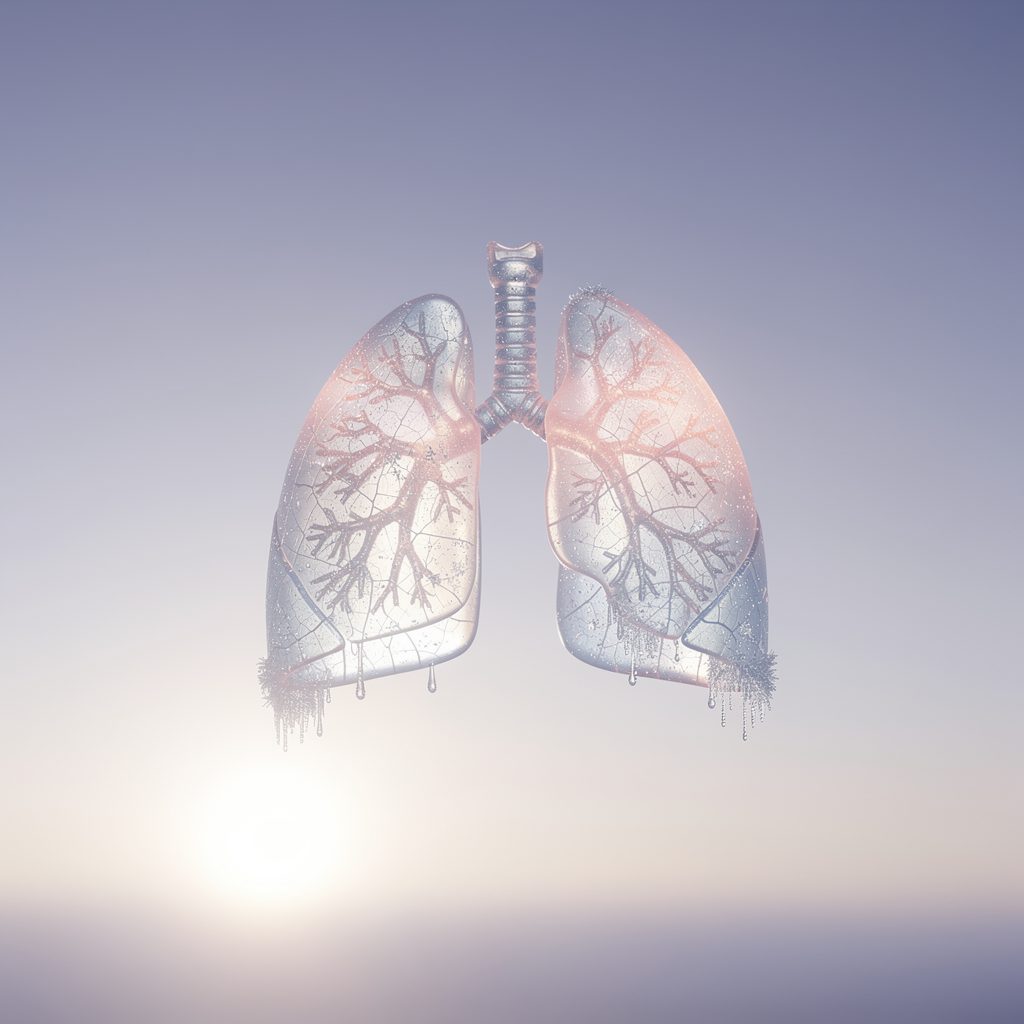
1. A Living Tree of Glass: The Architecture of Your Respiratory System
Picture a tree turned upside down, its branches splitting again and again into ever-finer twigs. That is the shape of your respiratory system. Air enters through the trachea, then flows into branching bronchi that divide deeper into each lung.
At rest, adult lungs move about 6–10 liters of air per minute through this intricate network. Every breath travels a carefully engineered pathway, warming and humidifying incoming air before delivering oxygen exactly where it needs to go.
The beauty here is efficiency. The branching design means fresh air reaches every corner of your lungs with each quiet inhale — no effort required, no conscious thought needed.
2. Hundreds of Millions of Tiny Balloons: Where Breath Becomes Life

Zoom in far enough, and the lung stops looking like an organ and starts looking like a cluster of soap bubbles. These are the alveoli — tiny air sacs where oxygen and carbon dioxide are exchanged.
The numbers behind lung health are staggering:
- Human lungs contain roughly 300–500 million alveoli.
- Together, they provide about 70 square meters of surface area for gas exchange.
- That entire exchange surface is folded neatly inside your chest.
Each alveolus is wrapped in fine blood vessels. Oxygen slips across an incredibly thin membrane into your bloodstream, while carbon dioxide drifts out to be exhaled. Breathing health depends on keeping this vast, delicate surface clean and open.
3. The Diaphragm: The Quiet Muscle Doing 80% of the Work

Beneath your lungs sits a dome-shaped sheet of muscle called the diaphragm. It is the primary breathing muscle, responsible for about 80% of quiet breathing.
When you inhale, the diaphragm flattens and descends, pulling air down into the lungs like a gentle piston. When you exhale, it relaxes back into its dome. Seen from below, this movement is surprisingly sculptural — a slow, rhythmic wave that continues even while you sleep.
Breathing is one of the few vital functions you can run on autopilot or take over manually. A few slow, deep breaths engage the diaphragm fully — and give your alveoli the fresh air they are built for.
4. Why a Forest Feels Like a Deep Breath

Step into a misty forest, and something changes. Your shoulders drop. Your breathing slows. Part of that calm is chemistry: trees and other vegetation help remove some particulate matter from the air and release oxygen through photosynthesis.
This is why green environments are so closely tied to clear lungs. Cleaner air means less work for the delicate filtering systems of your respiratory tract — and a gentler environment for those hundreds of millions of alveoli.
You do not need to live in a forest to benefit. Supporting breathing health can be as simple as:
- Spending time in parks or tree-lined streets when possible.
- Ventilating your home with fresh outdoor air on clear days.
- Checking local air quality reports before outdoor exercise.
5. A Tale of Two Lungs: Clean Air Versus Air Pollution
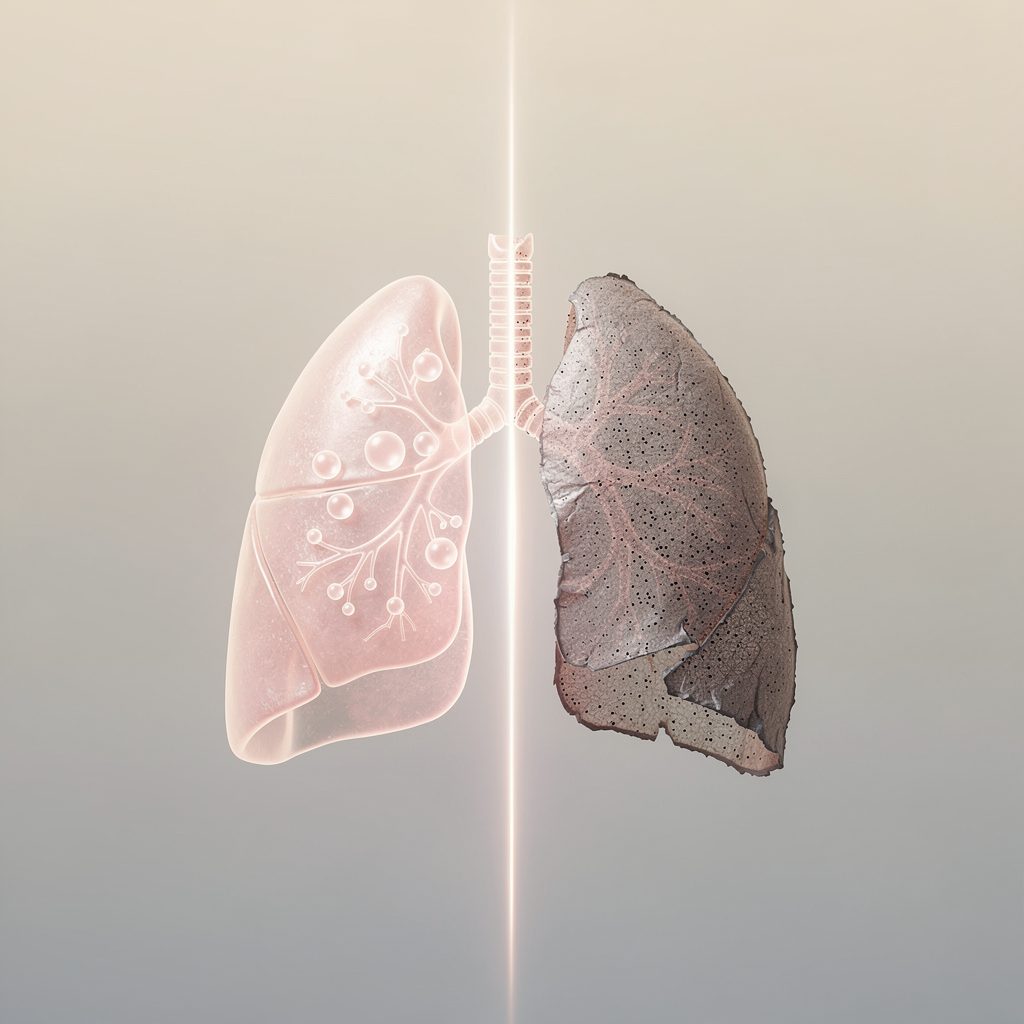
Our final image is a quiet confrontation. On one side, clean, healthy lung tissue. On the other, tissue darkened by fine particulate matter. The contrast is not just artistic — it reflects a real, measurable concern.
Long-term exposure to air pollution, especially PM2.5, is associated with reduced lung function and increased respiratory illness. These microscopic particles are small enough to travel deep into the respiratory system, reaching the very alveoli where gas exchange happens.
That is what makes clean air a daily health choice, not an abstract ideal. Every decision — from supporting greener cities to choosing a walk on a low-pollution day — is a small vote for your own clear lungs.
Key Takeaways: Breathing Well in a Beautiful System
Your body breathes beautifully, automatically, and constantly. Here is what to remember:
- Your lungs move 6–10 liters of air per minute at rest, through a branching tree of airways.
- 300–500 million alveoli create about 70 square meters of gas-exchange surface.
- The diaphragm powers roughly 80% of quiet breathing.
- Forests and vegetation help remove some particulate matter and release oxygen.
- PM2.5 pollution is linked to reduced lung function — clean air protects breathing health.
The next time you inhale, notice it. That single breath traveled an elegant biological network, met hundreds of millions of tiny air sacs, and powered every cell you own. Treat your lungs to the cleanest air you can find — they have been taking care of you all along.