Gulf Emirates Architecture: 5 Breathtaking Skyline Marvels
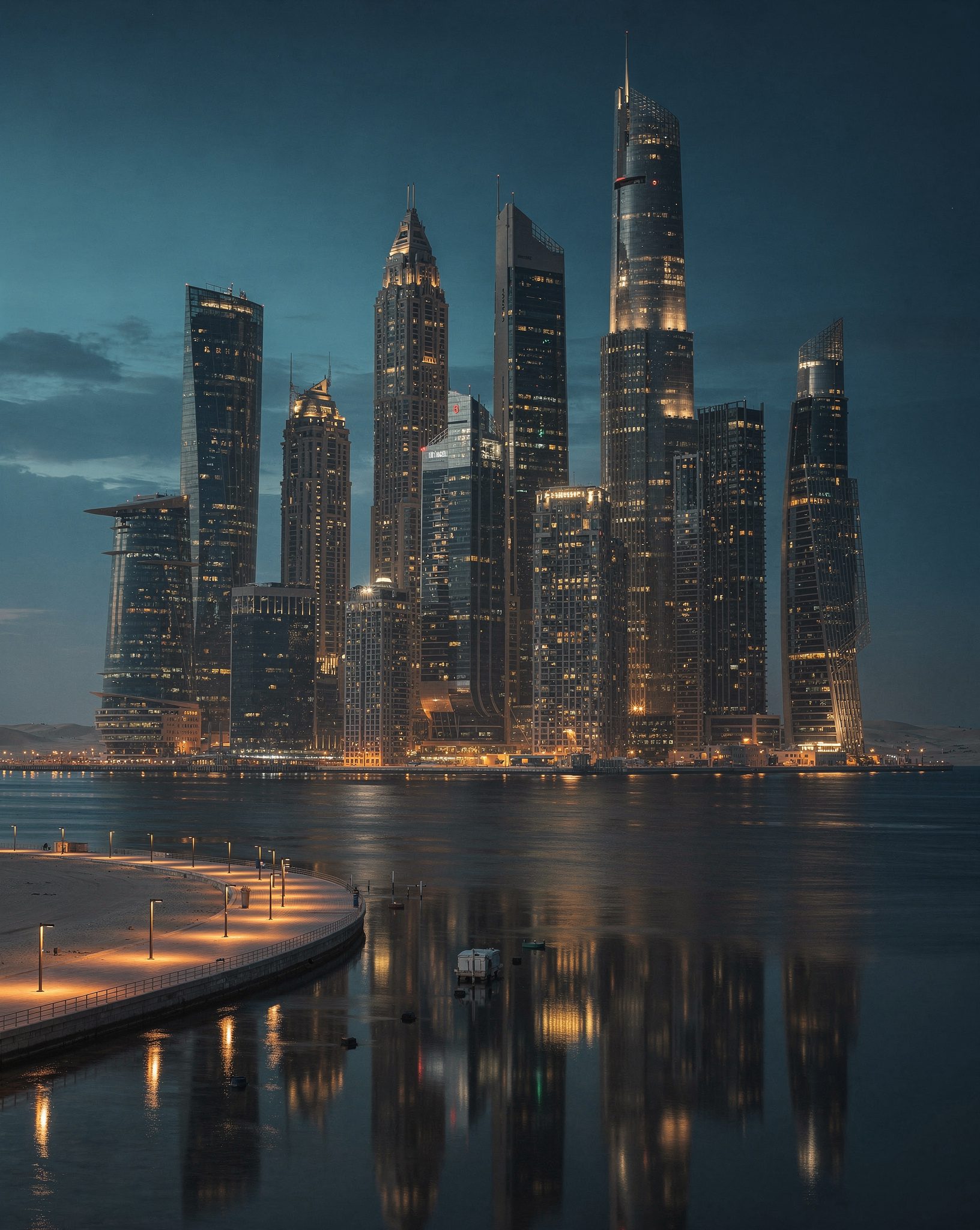

There is a particular hour in the Gulf Emirates when the desert exhales and the light turns to liquid gold. It is the moment when steel and glass stop being mere building materials and become something closer to sculpture — monuments to ambition rising from ancient sands. This is when Gulf Emirates architecture reveals its true character: dramatic, unapologetic, and deeply rooted in a heritage that stretches back centuries.
In this editorial visual journey, we explore five breathtaking architectural marvels of the Middle East, captured in the moody chiaroscuro of dusk. From the shimmering Dubai skyline to intimate details of geometric craftsmanship, these are the images and stories of a civilization building tomorrow from the raw ingredients of yesterday.
The DNA of Gulf Design: Where Sand Meets Steel
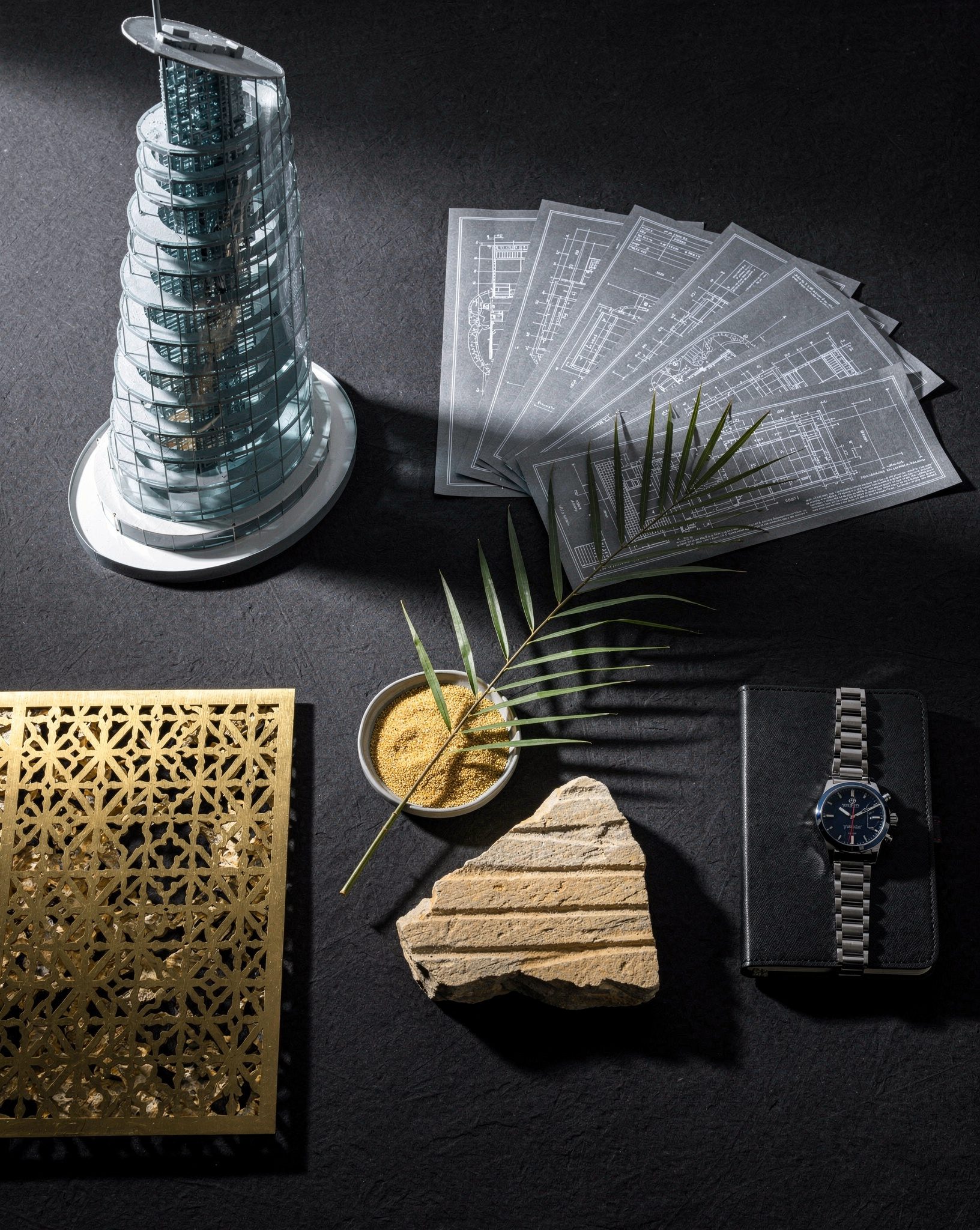
To understand modern Gulf architecture, you first have to understand its ingredients. This is a design language shaped by extremes — scorching heat, endless dunes, and a cultural memory that values both hospitality and grandeur.
Look closely and you’ll find a fascinating tension at play. Traditional desert materials and motifs — the intricate latticework of the mashrabiya, warm sandstone tones, flowing organic curves — sit alongside the coldest, most advanced engineering the world has to offer. Every façade, every curve, and every column carries a quiet conversation between the old and the new.
This is what separates luxury architecture in the Gulf from generic glass towers found anywhere else. The best buildings here don’t simply borrow futuristic forms; they translate a desert heritage into a contemporary vocabulary. The result is a distinctive aesthetic that feels both ancient and impossibly modern at once.
Materials That Tell a Story
The palette is instantly recognizable: crisp whites that echo traditional garments, deep charcoal shadows for contrast, and metallic accents that catch the desert sun. These are not accidental choices. They reflect a design philosophy where restraint and drama coexist — a hallmark of great Middle East architecture.
Magic Hour: When Towers Turn to Molten Gold
If there is one thing every architectural photography enthusiast knows about the Gulf, it’s that timing is everything. The desert light is unforgiving at midday, flattening even the most dramatic forms. But as the sun begins its descent, something magical happens.
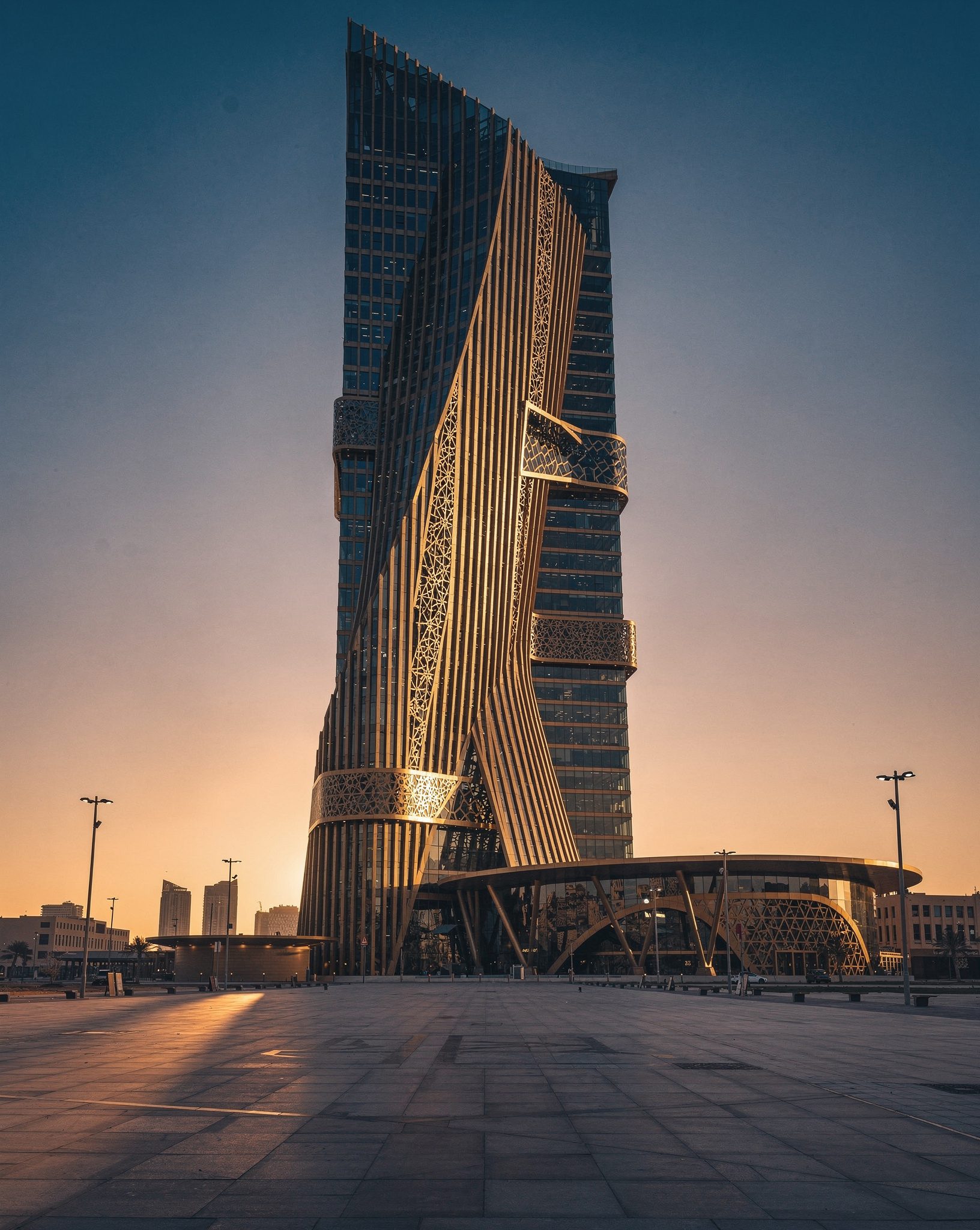
Watch a soaring glass-and-steel skyscraper in the final golden minutes before sunset and you’ll witness a transformation. The warm directional light floods across the tower’s twisting façade, igniting each glass panel until the whole structure appears to glow from within. What was cold and reflective becomes warm and alive.
This is the magic hour that defines editorial architecture in the region — the moment when engineering becomes emotion. Photographers travel from across the globe to capture these fleeting minutes, when the desert sky and the towering skyline seem to catch fire together.
The Art of the Twist
Many of the Gulf’s most celebrated desert skyscrapers feature twisting, spiraling silhouettes. Beyond their sculptural beauty, these forms often serve practical purposes — deflecting harsh winds, self-shading against the sun, and creating dynamic profiles that shift as you move around them. Form and function, dancing together in the heat.
Heritage and Ambition Standing Together
For all the talk of steel and scale, the true story of Gulf architecture is a human one. Behind every record-breaking tower is a dream — and a people who carried their traditions from tents in the desert into gleaming cities within a single lifetime.
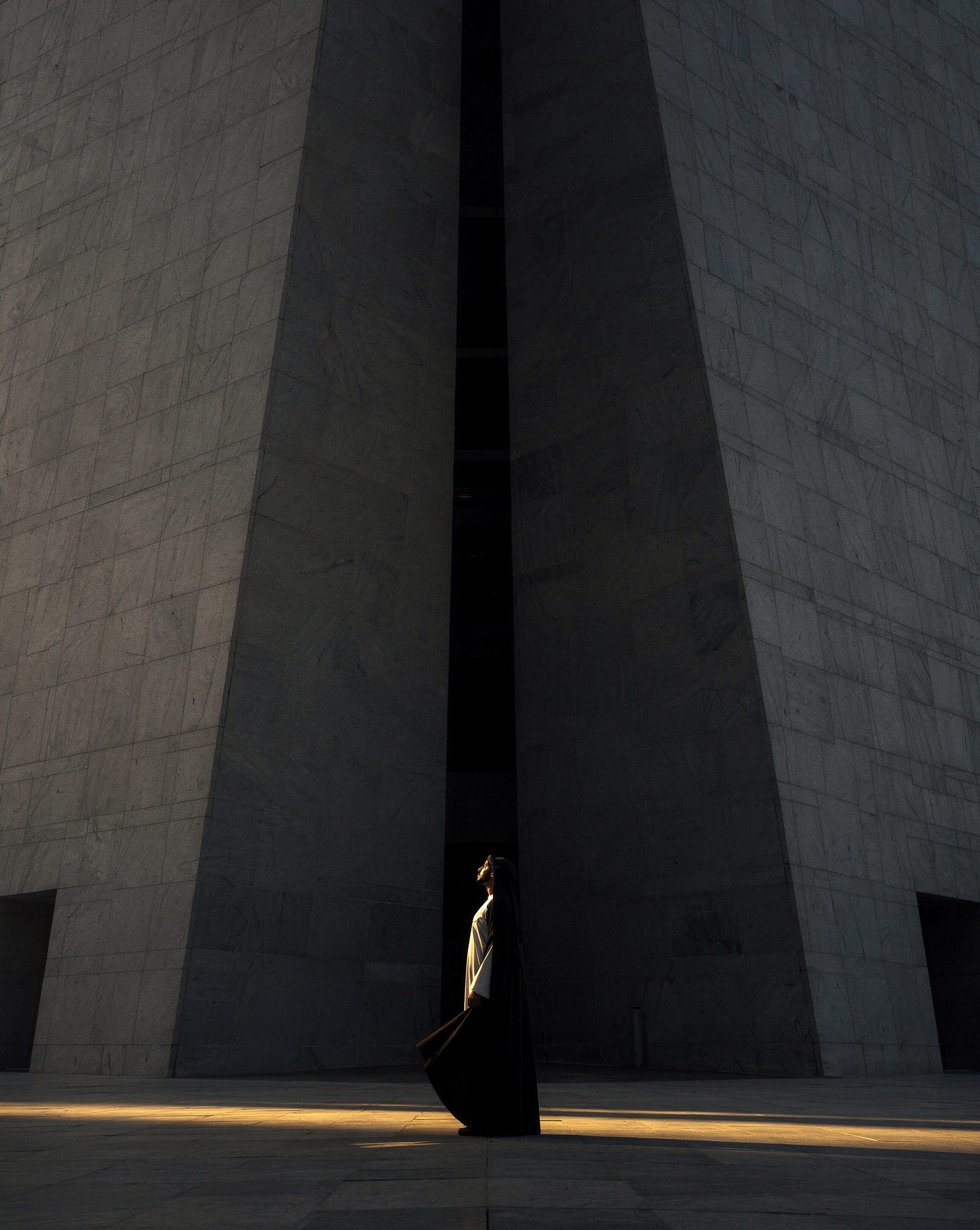
There is nothing quite like the image of a lone figure in flowing traditional attire — a crisp white kandura or an elegant dark abaya — standing at the base of a monumental modern building. In that single frame, you feel the entire narrative: heritage and ambition, tradition and progress, standing side by side in the fading light.
This human scale is essential. Without it, these structures risk becoming abstract feats of engineering. With it, they become monuments to a very human aspiration — the desire to build something extraordinary, to honor the past while reaching for the future. It’s this emotional resonance that elevates the best Gulf Emirates architecture beyond spectacle.
Blue Hour: A Skyline Born in a Single Generation
As dusk deepens and the golden light gives way to the cool, moody tones of blue hour, the full skyline emerges in all its glory. This is perhaps the most breathtaking view of all.
Seen across dark, shimmering water, a Gulf coastal skyline reveals itself as a constellation of towers — a dense cluster of dramatic skyscrapers of varying heights rising against a deep, moody sky. Lights flicker on one by one, each window a small point in a glowing architectural galaxy.
What makes this scene so extraordinary is not just its beauty but its context. Much of what you see rose from empty coastline within living memory. The Dubai skyline and those of its neighboring emirates represent one of the most rapid urban transformations in human history — a testament to vision, resources, and relentless ambition.
The Coastal Advantage
Water plays a starring role in Gulf urban design. Many skylines are built along coastlines and man-made waterfronts, allowing the towers to reflect endlessly across the surface. During blue hour, this mirrored effect doubles the drama, creating some of the most iconic imagery in all of modern architecture.
The Beauty of Restraint: Details That Complete the Story
After the grand skylines and golden towers, it’s easy to forget that true awe often lives in the smallest details. Gulf architecture understands this better than most.
Consider a single architectural detail isolated against vast negative space — the elegant curve of a white geometric mashrabiya screen, a play of light and shadow across a perforated surface. In this quiet moment, the entire story completes itself. Here is where desert tradition lives on most directly, in the intricate screens that once cooled homes and preserved privacy, now reimagined as high-design elements.
This is the lesson that the finest luxury architecture in the Gulf teaches us: bigger is not always more powerful. Sometimes a single curve of light against endless shadow says more than a thousand-foot tower. Restraint, quiet elegance, and reverence for craft are just as essential to the region’s design identity as its soaring heights.
A Civilization Built on Contrast
What ultimately makes Gulf Emirates architecture so compelling is its embrace of contrast. Ancient and futuristic. Vast and intimate. Golden light and deep shadow. Desert stillness and urban energy. These tensions don’t compete — they complete each other, creating a visual language unlike anywhere else on earth.
To photograph these marvels at dusk is to capture a civilization mid-transformation, still building its dream one dramatic silhouette at a time. Whether you’re drawn to the epic scale of the skyline or the quiet poetry of a single latticed screen, the Gulf offers an inexhaustible source of wonder for anyone who loves editorial architecture and the art of building beautifully.
Share This Journey
Did these breathtaking Gulf skylines inspire you? Share this visual journey with fellow lovers of architectural photography and Middle East architecture. If you’re planning your own trip to capture these desert skyscrapers at magic hour, save this guide for your golden-hour shot list.
Related Articles
- Blue Hour Photography: Mastering the Moody Cityscape
- The World’s Most Dramatic Coastal Skylines
- Where Tradition Meets Tomorrow: Cultural Motifs in Modern Design
- A Photographer’s Guide to Shooting Skyscrapers at Dusk