Canada Wildfire Skies: 5 Haunting Smoke-Filled Views
Canada Wildfire Skies: 5 Haunting Smoke-Filled Views
There is a strange beauty in catastrophe. When wildfire smoke rolls across Canada, it does something almost impossible to describe until you have seen it with your own eyes: it turns ordinary skies into scenes from another world. The sun becomes a dim red orb. Cities disappear behind walls of haze. Afternoons dissolve into an eerie sepia dusk. This is the surreal new face of the North American summer — and it is worth pausing to look at.
In this cinematic visual journey, we explore five haunting views of Canada’s wildfire smoke phenomenon. These images capture how blazing skies transform everyday landscapes into scenes that are apocalyptic and beautiful all at once. More than that, they show us climate change made visible.
When the Sky Turns Orange: A Summer Transformed
Few things reshape a landscape as quickly and completely as wildfire smoke. In a matter of hours, a clear blue afternoon can become a suffocating orange twilight. The Canada wildfires of recent seasons have pushed enormous plumes of smoke across vast distances, drifting over major cities, small towns, lakes, and forests alike.
This isn’t only a Canadian story. The wildfire smoke born in the boreal forests has traveled hundreds and even thousands of kilometers, dimming skies far beyond the fire fronts themselves. The result is a shared visual experience — a red sun visible to millions who never see a flame.
Why the Sun Looks Red Through Smoke
The eerie red sun smoke effect isn’t magic; it’s physics. When sunlight passes through dense smoke particles, shorter blue wavelengths scatter away while longer red and orange wavelengths pass through more easily. What remains is that haunting red orb hanging low in a hazy sky. It’s the same principle behind vivid sunsets, only amplified and prolonged into an all-day phenomenon.
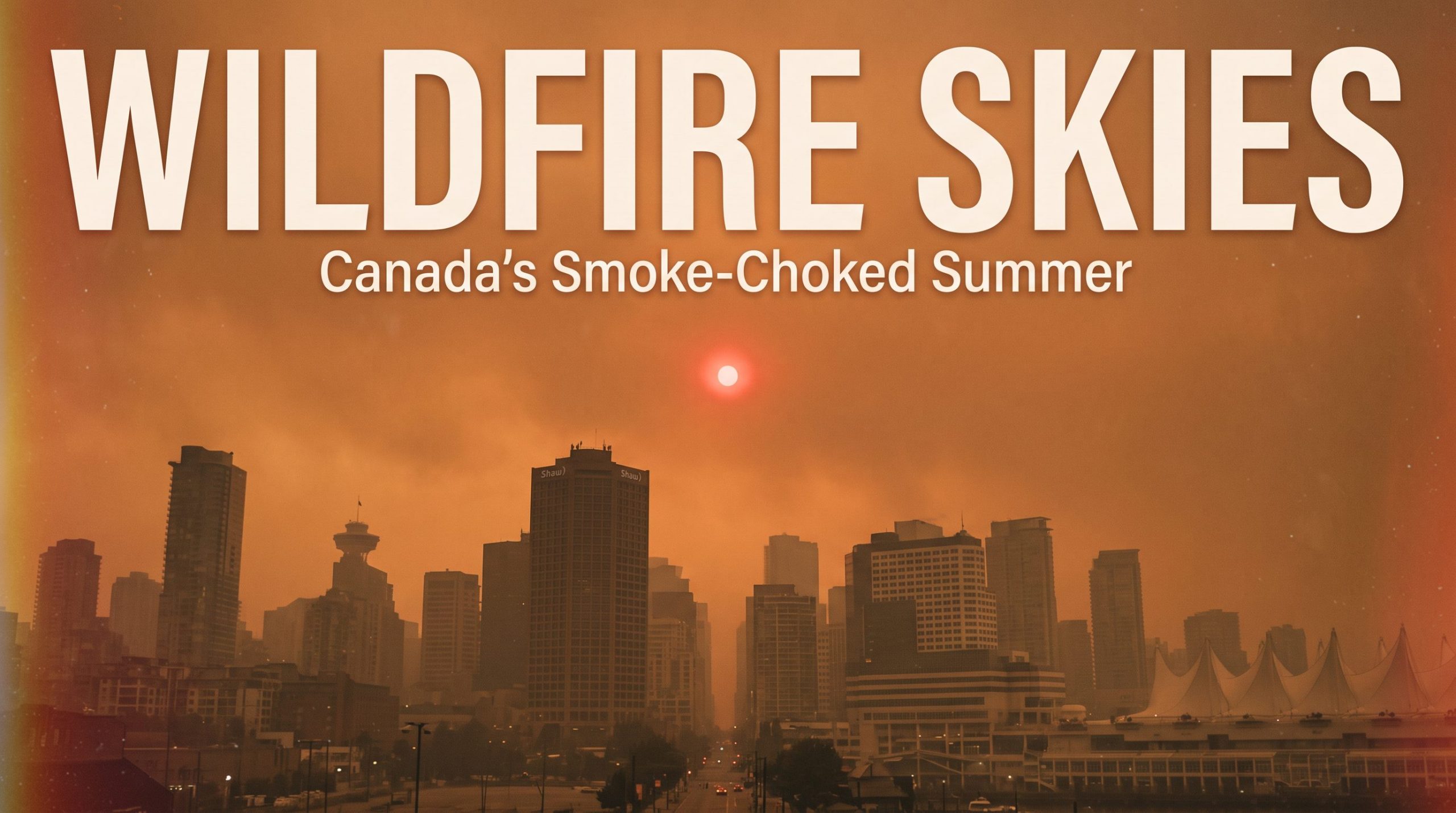
View 1: A City Swallowed by Smoke
The first and perhaps most striking view is that of a major Canadian city vanishing beneath a wall of wildfire smoke. Skyscrapers fade into a brownish-orange curtain. The sun, when you can find it, glows like a dying ember overhead.
Scenes like this have become disturbingly familiar. Urban skylines that normally sparkle against blue skies are reduced to ghostly silhouettes. It’s a reminder that wildfire smoke doesn’t stay in the wilderness — it settles over the places millions of people call home, affecting air quality for entire regions.
View 2: When Afternoon Becomes an Eerie Dusk
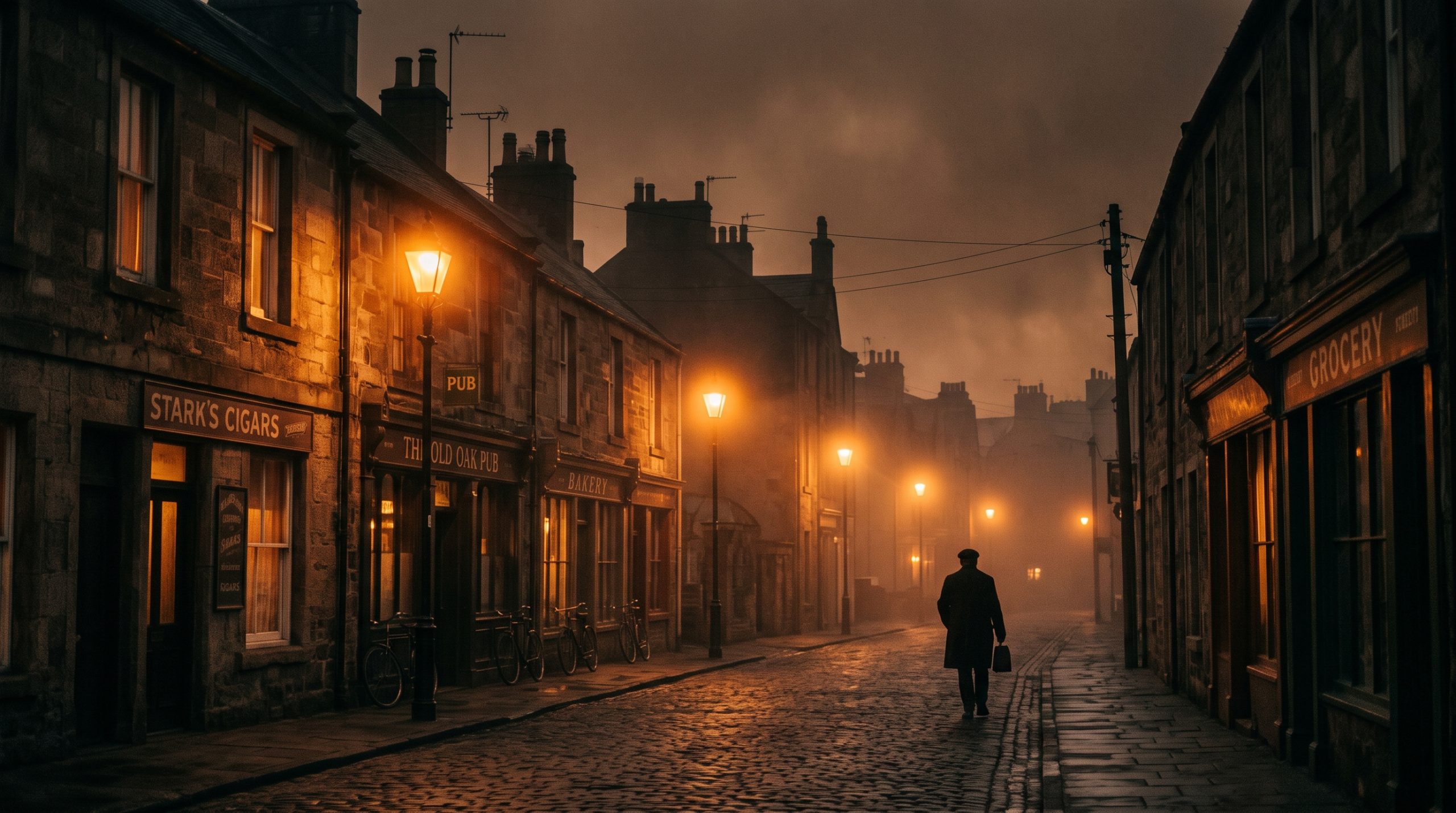
One of the most unsettling effects of heavy wildfire smoke is how it distorts time itself. By mid-afternoon, the smoke can turn day into an eerie sepia dusk. The light dims so dramatically that automatic streetlights flicker on hours early, tricked into believing night has fallen.
Walking through a neighborhood under these conditions feels deeply strange. The familiar becomes otherworldly. Cars switch on their headlights at noon. Shadows soften and vanish. The whole world takes on a warm amber tint, as if the day is being viewed through an old film reel.
The Human Experience of Orange Skies
Beyond the visual spectacle, these smoke-filled days carry real weight. Diminished air quality prompts health warnings, keeps people indoors, and disrupts everyday routines. The beauty in these images sits alongside a quieter unease — the sense that something fundamental is shifting.
View 3: The Same Lake, Days Apart
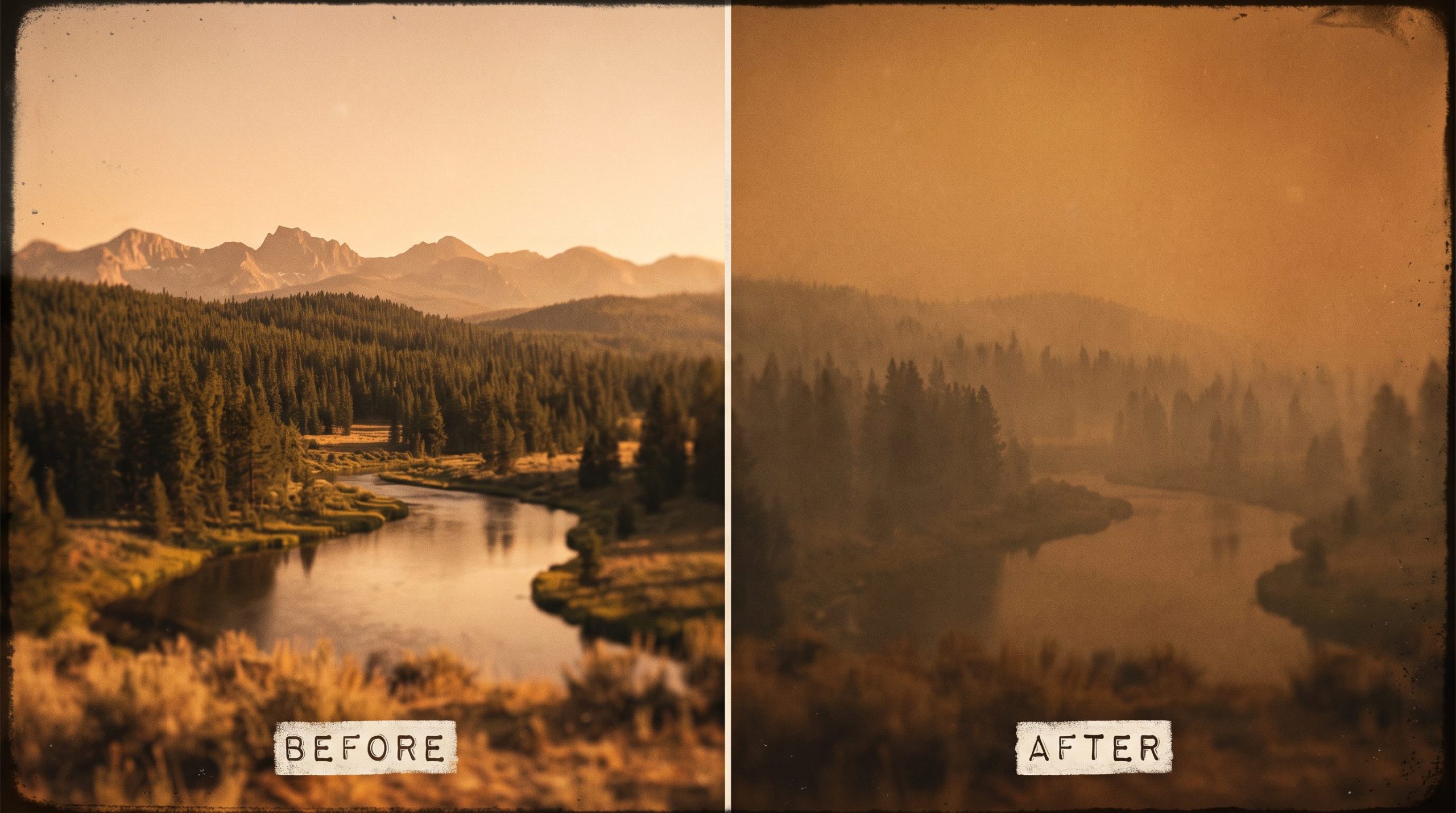
Perhaps no image captures the speed of transformation better than a before-and-after view of a single lake. On one side: clear summer blue, calm water reflecting an open sky. On the other, days apart: choking orange smoke that erases the horizon and drapes the water in a hazy amber glow.
This kind of contrast is what makes the Canada wildfires so visually arresting. A landscape you thought you knew can be rewritten in a matter of hours. The orange sky doesn’t creep in gradually so much as it arrives, transforming everything it touches.
View 4: The True Scale From Above
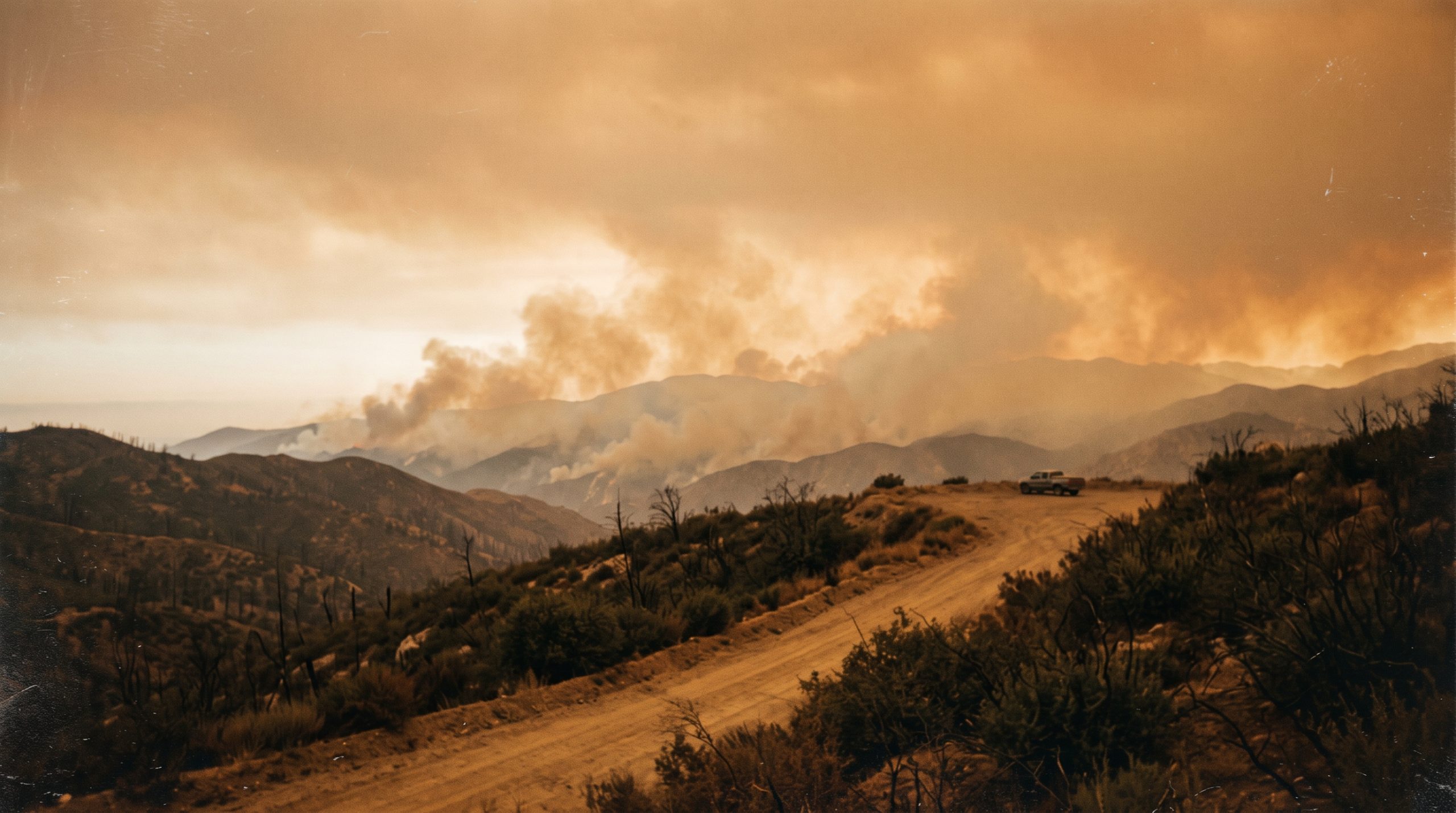
From the ground, wildfire smoke feels vast. From above, its true scale becomes almost incomprehensible. Aerial views reveal a boreal wilderness dwarfed by an ocean of smoke, with fire fronts glowing faintly on the distant horizon.
The boreal forest is one of the largest intact ecosystems on Earth, and boreal fires have always been part of its natural cycle. But the intensity and reach of recent smoke events offer a sobering perspective. When you see how much of the land disappears beneath the haze, the phrase “climate change made visible” stops being an abstraction and becomes something you can point to.
Smoke as a Signal
These sweeping views serve as a kind of signal — a visual marker of a planet under stress. Wildfire smoke doesn’t respect borders or maps. It flows where the wind takes it, carrying evidence of distant fires into skies far away. In this way, a single summer’s smoke becomes a shared global experience.
View 5: When Only the Red Sun Remains
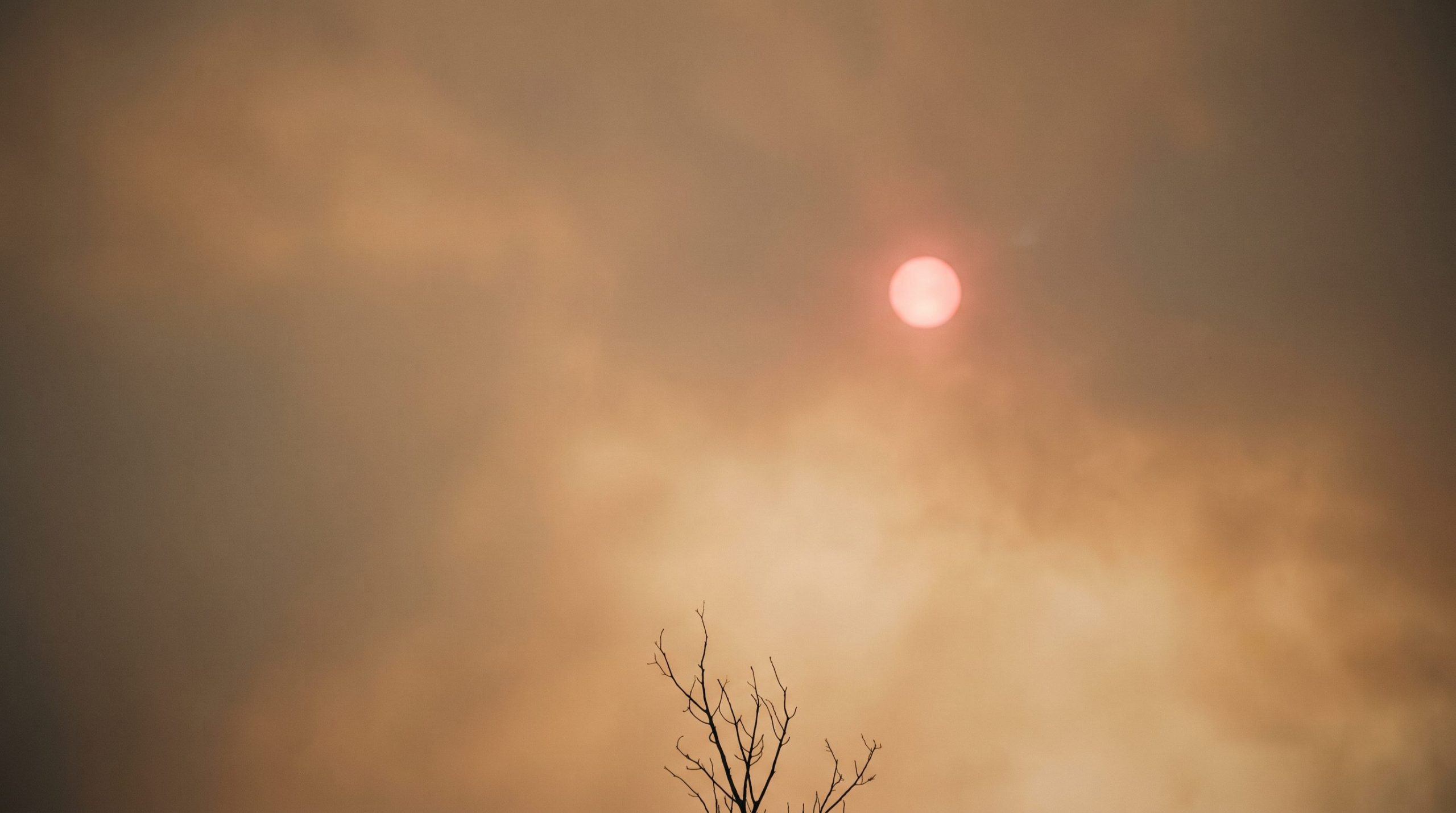
The final view strips everything away. When the smoke swallows the landscape entirely, only the red sun remains — a soft, glowing circle suspended in a field of amber haze. There are no landmarks, no skyline, no horizon. Just that quiet, humbling orb.
It’s a strangely peaceful image, given everything it represents. There’s no chaos in it, no visible flame. Only stillness, and a reminder of a planet in transformation. It’s the kind of view that stays with you — a summer we won’t forget.
What These Views Ask of Us
Documenting wildfire smoke through these five haunting scenes isn’t about romanticizing disaster. It’s about paying attention. The beauty in these images is real, but so is what they reveal: shifting patterns, stressed ecosystems, and skies that increasingly wear the color of fire.
The orange sky, the red sun through smoke, the dusk that arrives at noon — these are the images of our time. They invite us to look closely, to remember, and to consider what kind of summers lie ahead.
A Closing Thought
The next time you see a hazy amber sky or a dimmed red sun, take a moment. Behind that surreal beauty is a story about our changing climate, our air quality, and the boreal forests that shape so much of Canada’s landscape. These are views worth remembering — not because they are pretty, but because they are true.