5 Haunting Abandoned Places Reclaimed by Silence
There is a peculiar kind of beauty in the places we leave behind. When people vanish, silence moves in — and over time, silence itself becomes something you can almost feel. In this meditative journey, we explore five haunting abandoned places where slow decay, quiet light, and patient nature have transformed emptiness into something serene. This is not a story about ruin. It is a story about what remains.
Each of these forgotten ruins tells a different version of the same truth: that decay is not the end of a place, but a slow transformation into something new. Through the lens of decay photography, we find not horror, but stillness. Let’s step quietly inside.
Why Abandoned Places Feel So Alive
It sounds like a contradiction. How can an abandoned building — hollow, empty, forgotten — feel alive? Yet anyone drawn to urban exploration knows the sensation. The air is different. Sound behaves strangely. Dust drifts through beams of light like slow-moving weather. These spaces breathe in a way that inhabited rooms never do.
The muted, monochromatic mood of these places — soft greys, faded blues, the pale wash of natural daylight — strips away distraction. What’s left is texture, silence, and the quiet evidence of time passing. That is the essence of haunting beauty: not fear, but reverence.
#1 — The Silent Grand Theatre
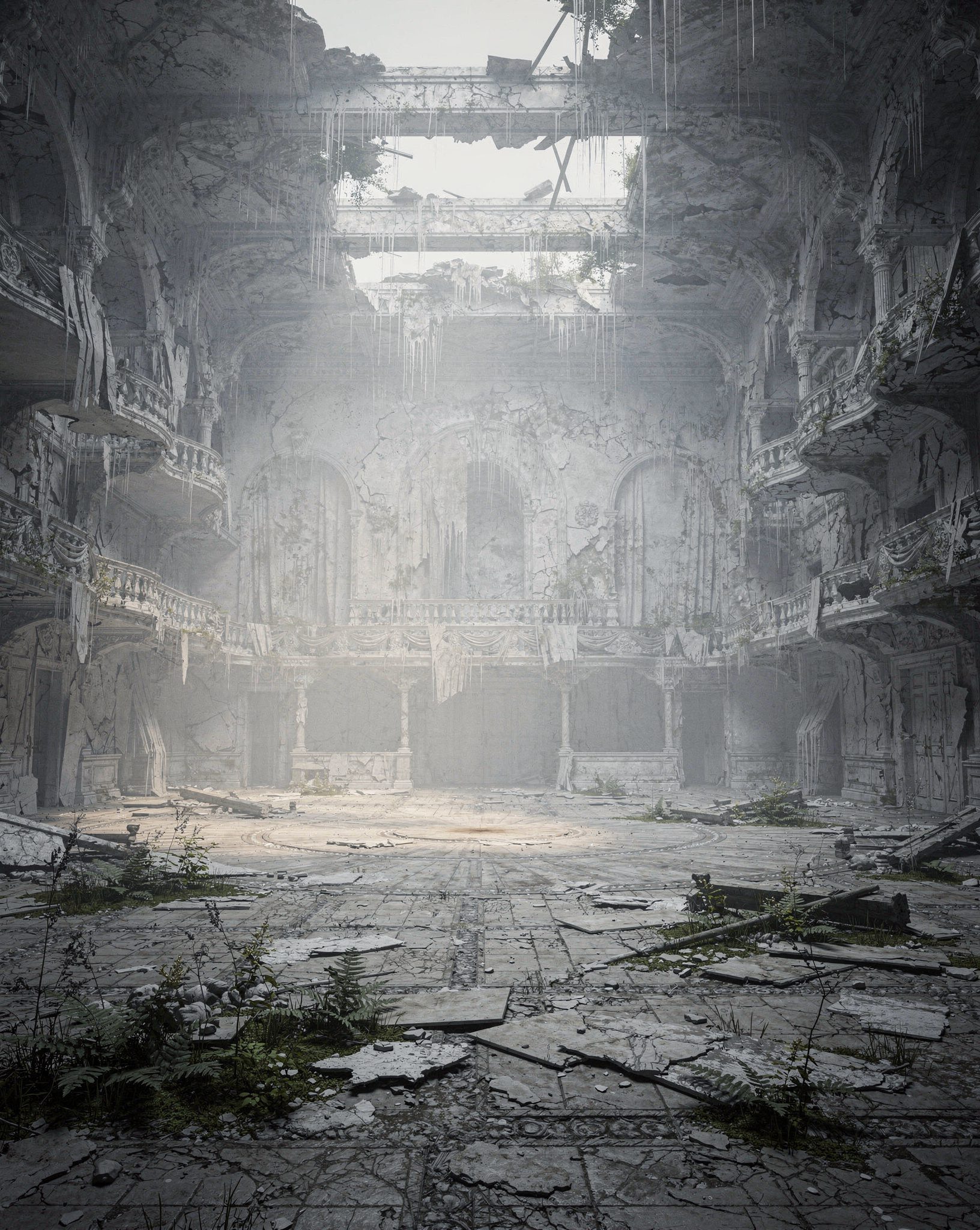
We begin with the most striking of our forgotten ruins: a grand theatre that fell silent decades ago. Once filled with music, applause, and the shuffle of countless footsteps, it is now a roofless cathedral of dust and daylight. Sunlight pours through the openings where a ceiling once was, illuminating rows of seats slowly surrendering to the elements.
What captivates most is the symmetry. Even in decay, the architecture holds its shape — arches, balconies, and stage still framed in perfect balance. Nature has crept in, but it has not erased the design. It has only softened it, layering moss and shadow over the geometry of human ambition.
The Beauty of Stillness
Standing in a space like this, you understand why decay photography resonates so deeply. The theatre no longer performs for an audience. Instead, it performs for time itself — a slow, silent show with no ending.
#2 — The Ghost Town Factory
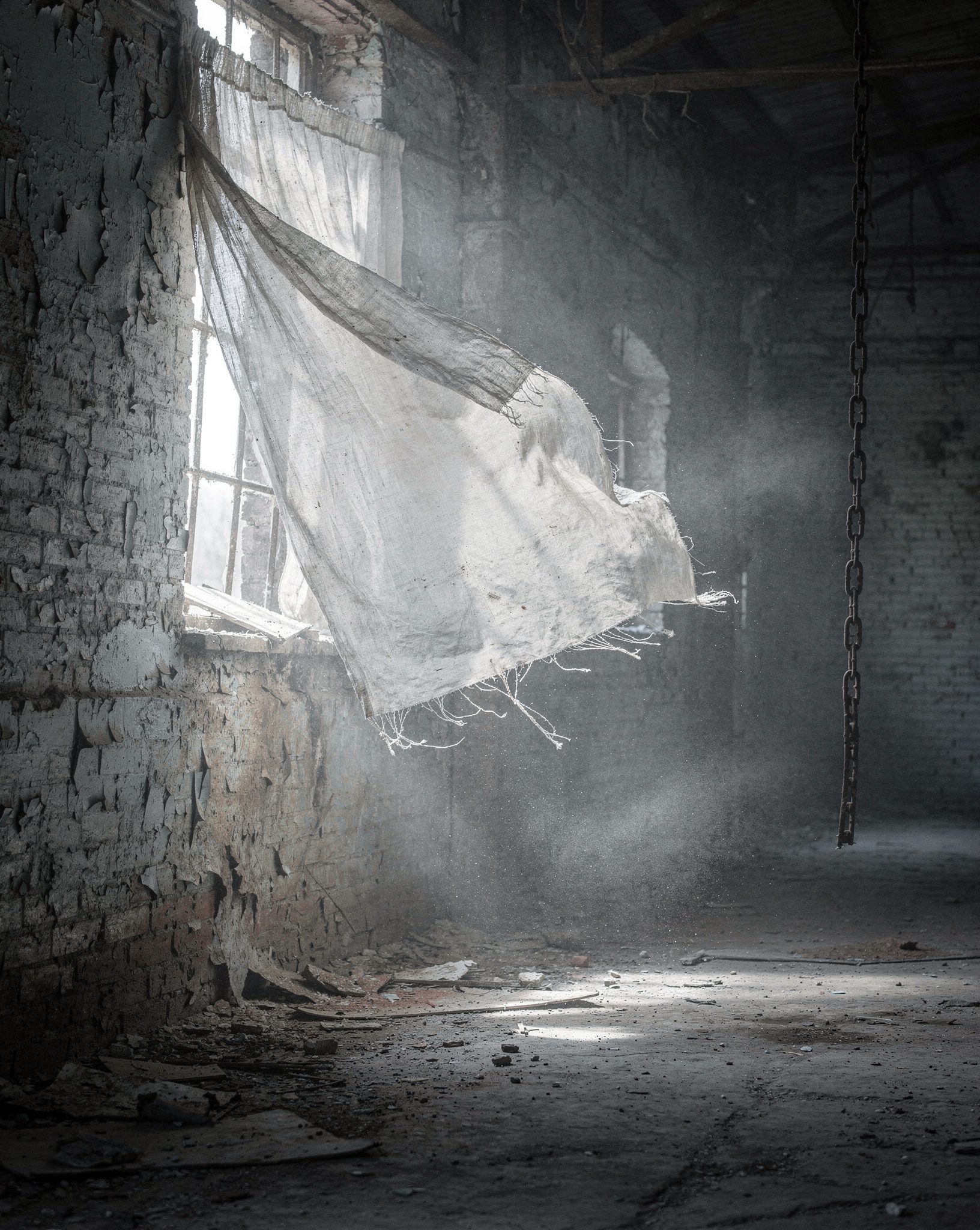
Our second stop takes us to a ghost town factory, where the wind still moves through torn curtains and dust dances in the light. Industry once roared here. Now the only motion comes from the breeze slipping through broken windows and the slow drift of particles caught in the sun.
This is one of those abandoned buildings that reminds you these places are not truly dead. They breathe. Every gust that stirs the fabric, every creak of settling metal, is a sign that the site is still in dialogue with the world around it — just on a slower, quieter timeline.
Listening to Emptiness
In a ghost town, silence is never total. There is always the whisper of wind, the tick of cooling metal, the distant call of birds nesting in the rafters. These small sounds fill the void left by human activity, creating an ambient hush that feels almost sacred.
#3 — The Intimate Detail of Decay
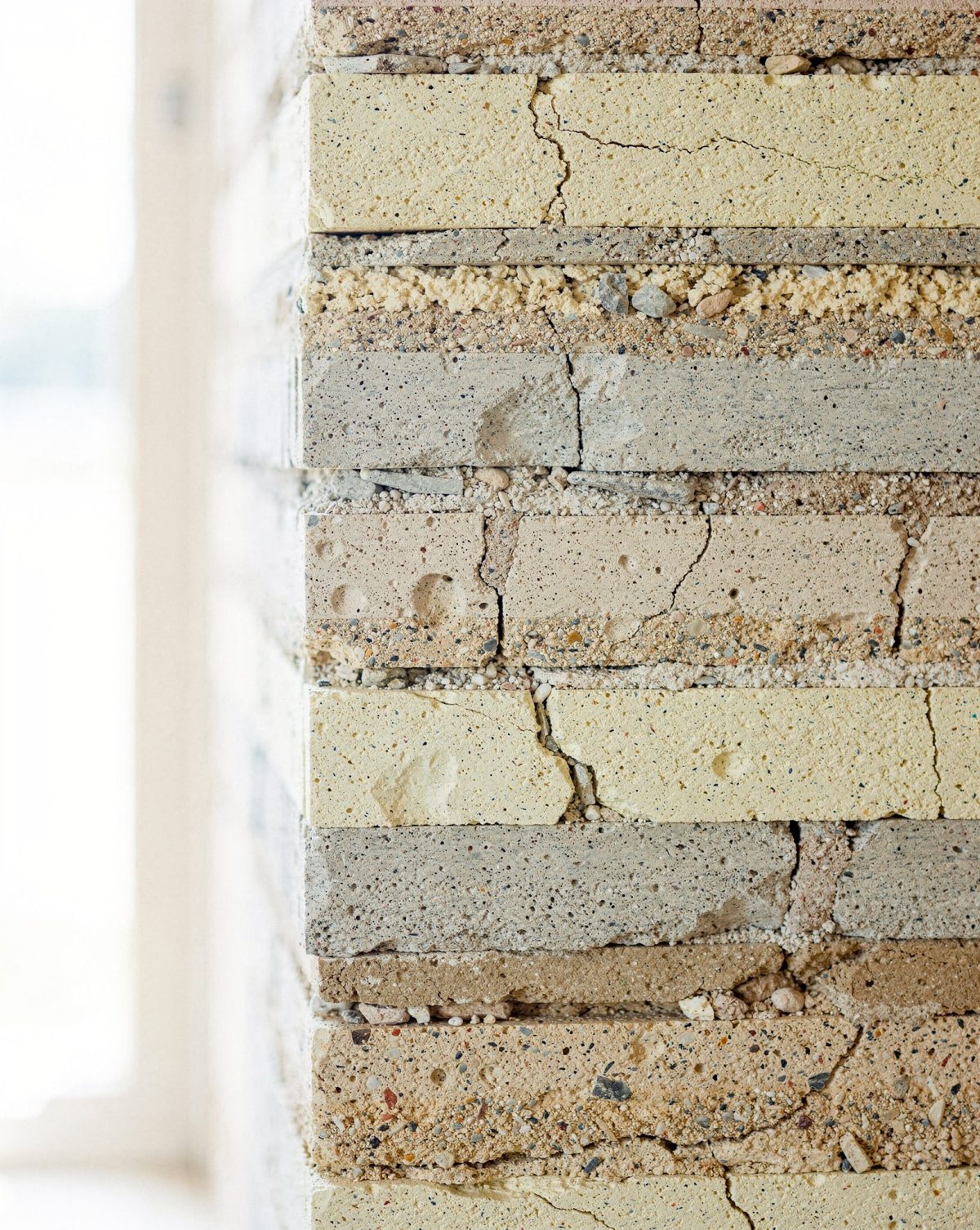
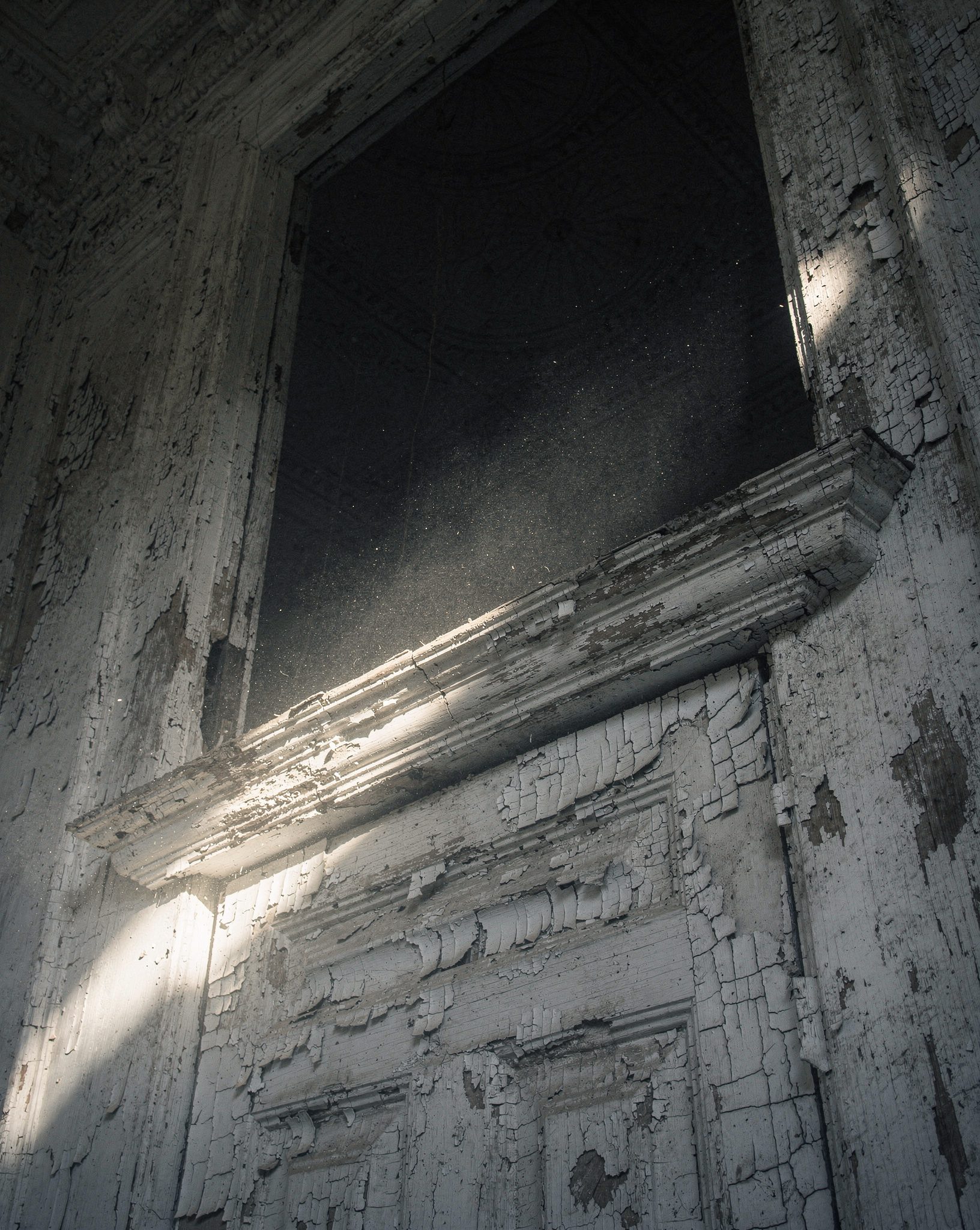
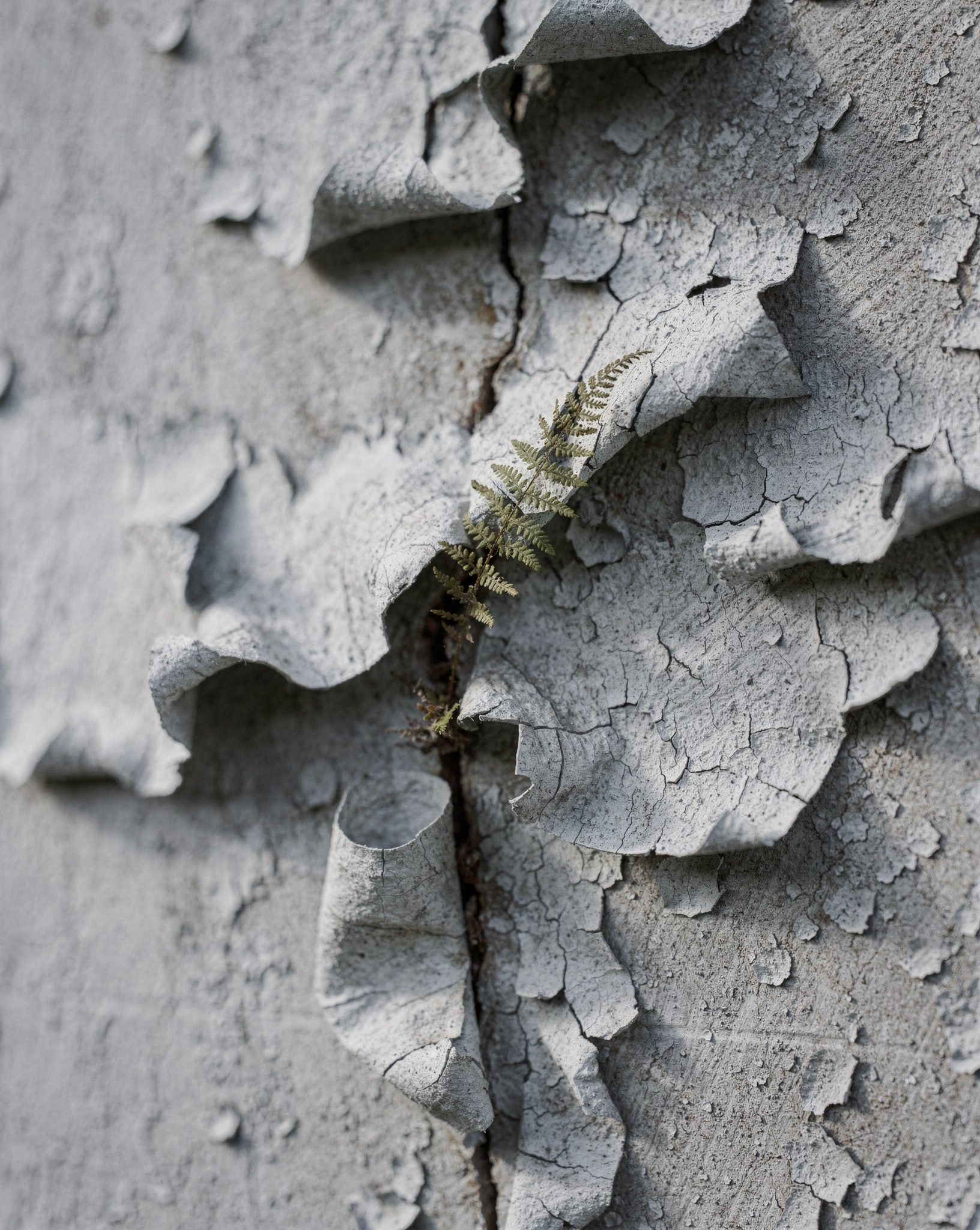
Now we look closer. Our third place invites us to slow down and examine the texture of time itself. Every peeling layer of paint is a year of silence. Every crack, every stain, every curling strip of wallpaper marks the passage of seasons no one was present to witness.
There is an intimacy here that larger spaces cannot offer. When you focus on a single wall, a single windowsill, a single patch of light, urban exploration becomes almost meditative. You are no longer looking at a ruin. You are reading a diary written by weather, moisture, and time.
Life quietly reclaims these details, too — a sprout pushing through a floorboard, lichen spreading across concrete. Decay and growth happen in the same frame, side by side, telling the most honest story of all.
#4 & #5 — From Hollow Silence to Living Wilderness
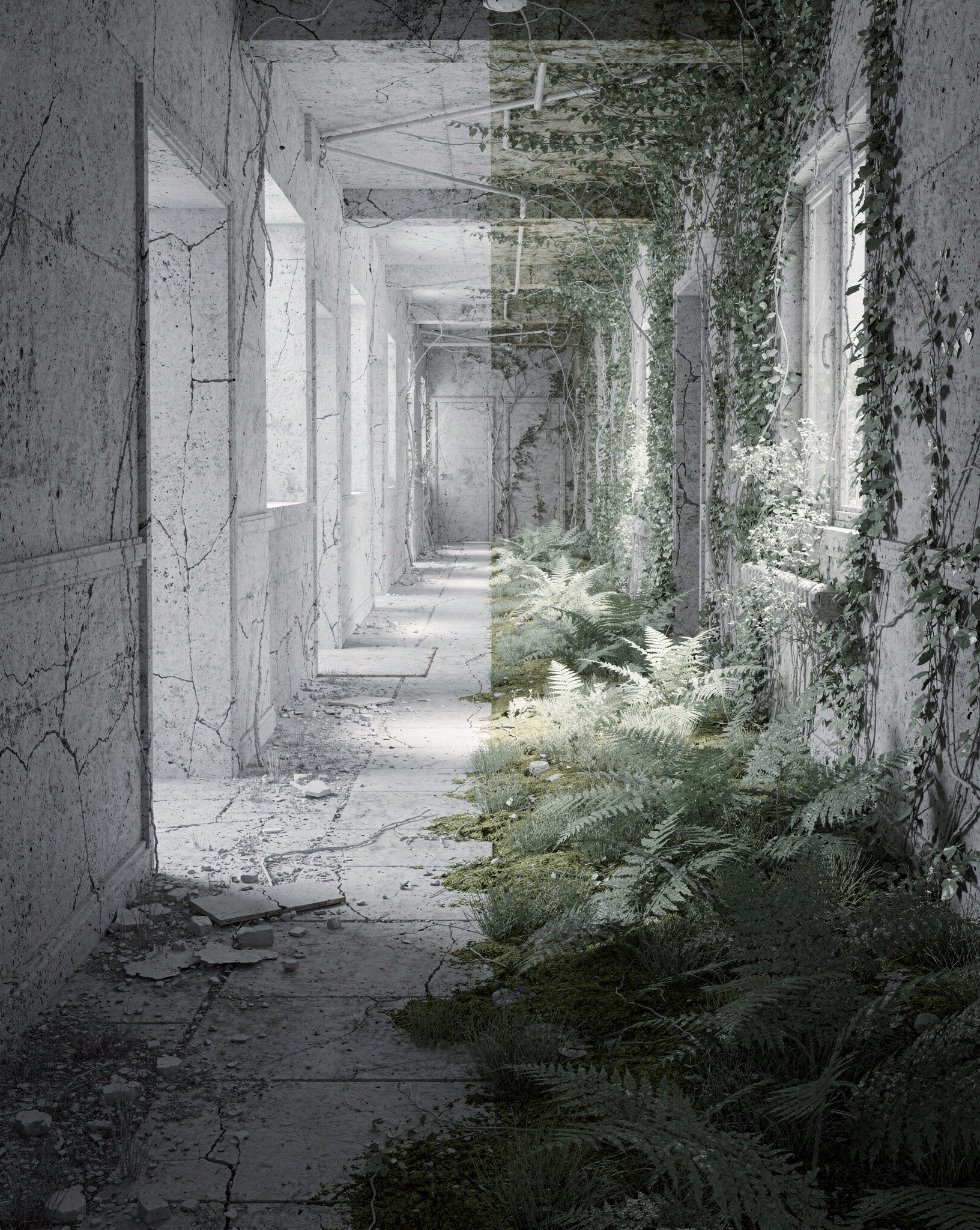
Our final images bring the journey full circle. The same corridor, transformed: from hollow silence into living wilderness. Where once there were bare walls and empty floors, nature has moved in with green persistence. Roots split stone. Vines climb toward the light. The abandoned building slowly becomes a garden.
This is the most powerful truth of all these abandoned places. Nature always reclaims what we leave behind. The process is neither violent nor mournful — it is patient, inevitable, and strangely peaceful. There is comfort in knowing that nothing is ever truly lost. It simply changes form.
The Quiet Lesson of Forgotten Ruins
Together, places #4 and #5 show two ends of the same spectrum: the emptiness of a space just after it is left, and the lush wilderness that eventually takes over. Between those two moments lies the entire poetry of decay — the slow, silent handover from human hands to natural ones.
What These Abandoned Places Teach Us
Exploring forgotten ruins is not about chasing thrills or documenting destruction. At its heart, this kind of quiet urban exploration is about presence. It asks us to slow down, to notice light and texture, to sit with silence long enough that it stops feeling empty and starts feeling full.
The haunting beauty of these five places lies in their honesty. They do not pretend. They wear their age openly, showing us that decline can be graceful and that endings can be beautiful. In a world obsessed with the new and the polished, there is something deeply grounding about a place that has simply been allowed to fade.
How to Appreciate Decay Photography
If these images move you, consider what draws your eye. Is it the symmetry of the theatre? The drifting dust of the factory? The intimate texture of peeling paint? Or the green triumph of nature reclaiming its ground? Each response reveals something about how we understand loss, memory, and renewal.
Final Thoughts: Peace in What We Abandon
From a silent grand theatre to a ghost town factory, from intimate layers of decay to living wilderness, these five abandoned places offer more than eerie atmosphere. They offer perspective. They remind us that silence is not absence, that decay is not ending, and that beauty can grow in the most forgotten corners of the world.
So the next time you pass a shuttered building or an empty lot slowly greening over, pause. Somewhere inside, time is doing its quiet, patient work — and there is a strange, serene peace in that.