Bali Subak Terraces: 5 Ancient Water Wonders to Visit
No pumps. No water meters. No valves. Yet for more than a thousand years, Bali’s rice valleys have divided a scarce mountain resource fairly enough that farmers still use the same stones today. That system is called subak, and it is one of the most quietly brilliant pieces of ancient engineering you can walk through on foot.
Most visitors photograph the terraces and leave. Follow the water instead, and the landscape turns into a working machine.
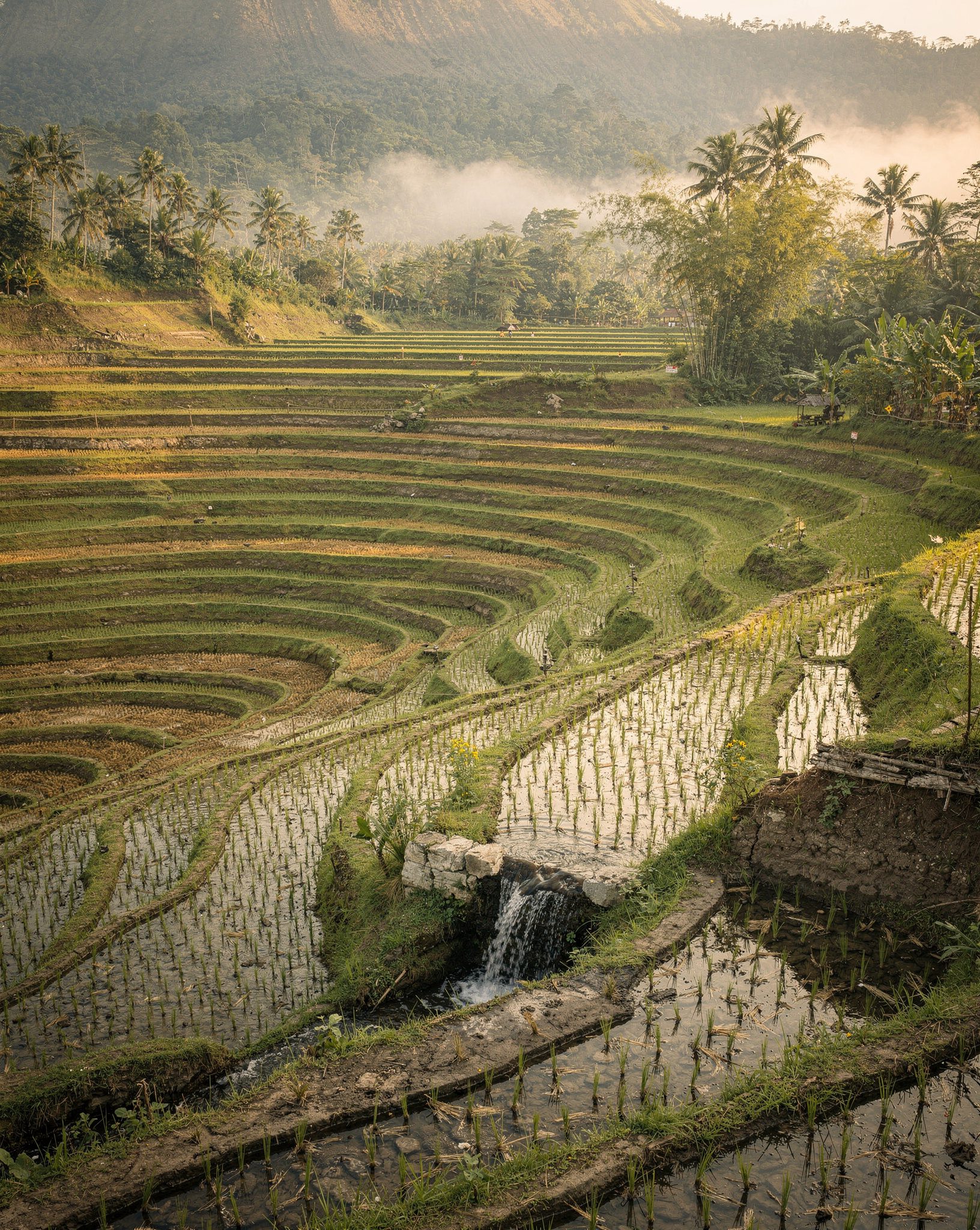
What Is Subak, Exactly?
Subak is a cooperative irrigation system that has shaped Bali’s rice valleys for over a thousand years. Local inscriptions reference organized water management on the island as early as the 9th century.
It is not just a set of ditches. It is a social contract between farming groups, temples and the slope itself — which is why UNESCO inscribed it in 2012 as a cultural landscape, not as a monument.
The engineering rule is simple and absolute: every drop moves by gravity. Water leaves a mountain stream, enters a canal, and descends terrace by terrace until it reaches the lowest paddy in the valley.
Nothing is pumped. The entire network runs on the mountain’s slope.
Wonder 1: The Gravity Network
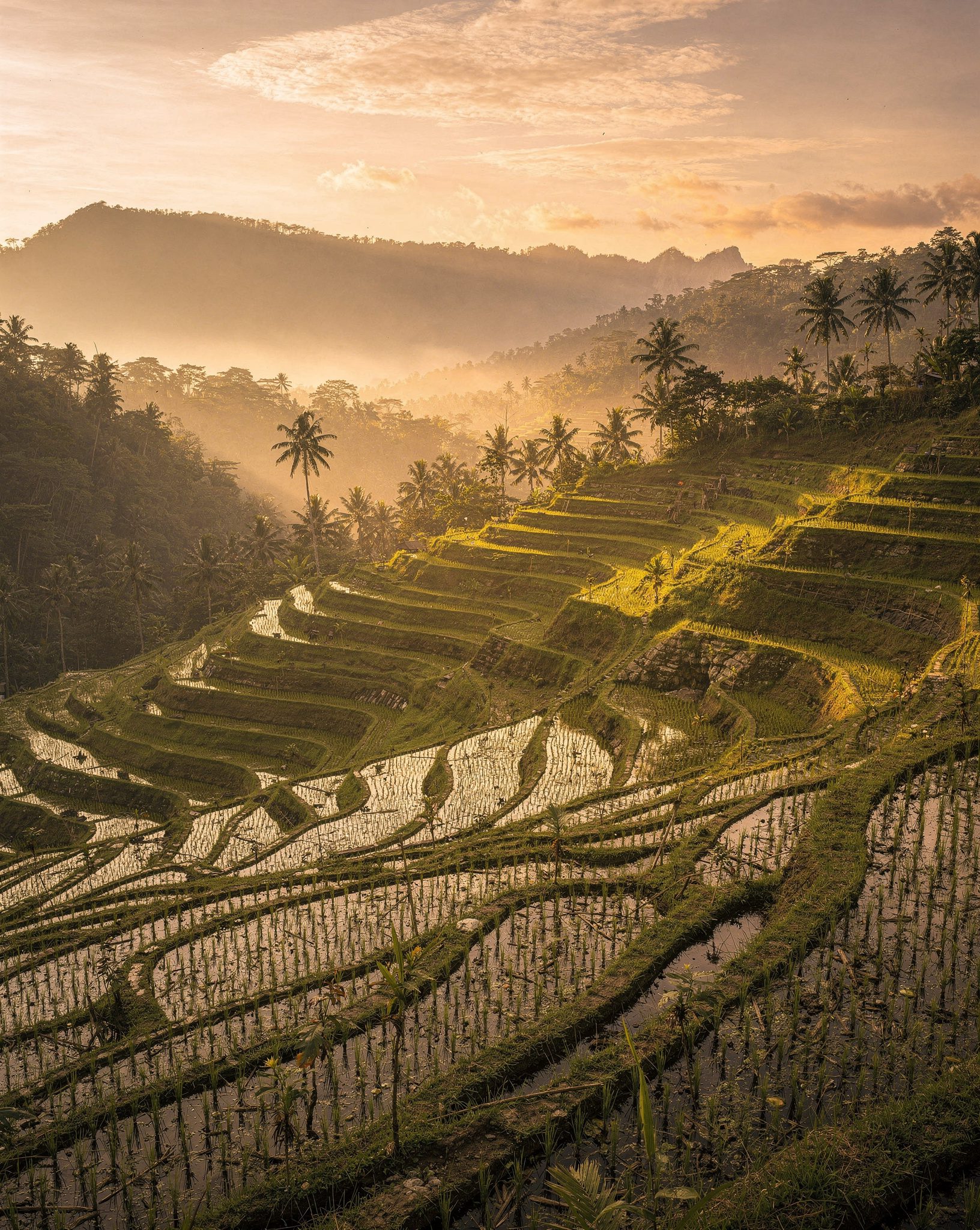
Stand at a high point above a terraced valley and trace the lines with your eyes. The curved bunds are not decorative contours — they are level surfaces holding water at a fixed depth.
Each terrace fills, then spills into the one below. That single principle, repeated a few hundred times down a hillside, is the whole system.
What to look for on your walk:
- Small openings in the low earth walls where water passes down a level
- Channels running along the contour rather than straight downhill
- The point where a canal splits into two smaller channels
Wonder 2: Tembuku — The Stone That Is a Contract
The genius of subak lives in small stone dividers called tembuku. They sit wherever a channel splits, notched so that each downstream group receives a fixed, agreed share of the flow.
The width of the slot is the contract. Wider notch, larger share. Narrower notch, smaller share. No meters, no pumps, no valves — just proportion, carved in stone and visible to everyone.
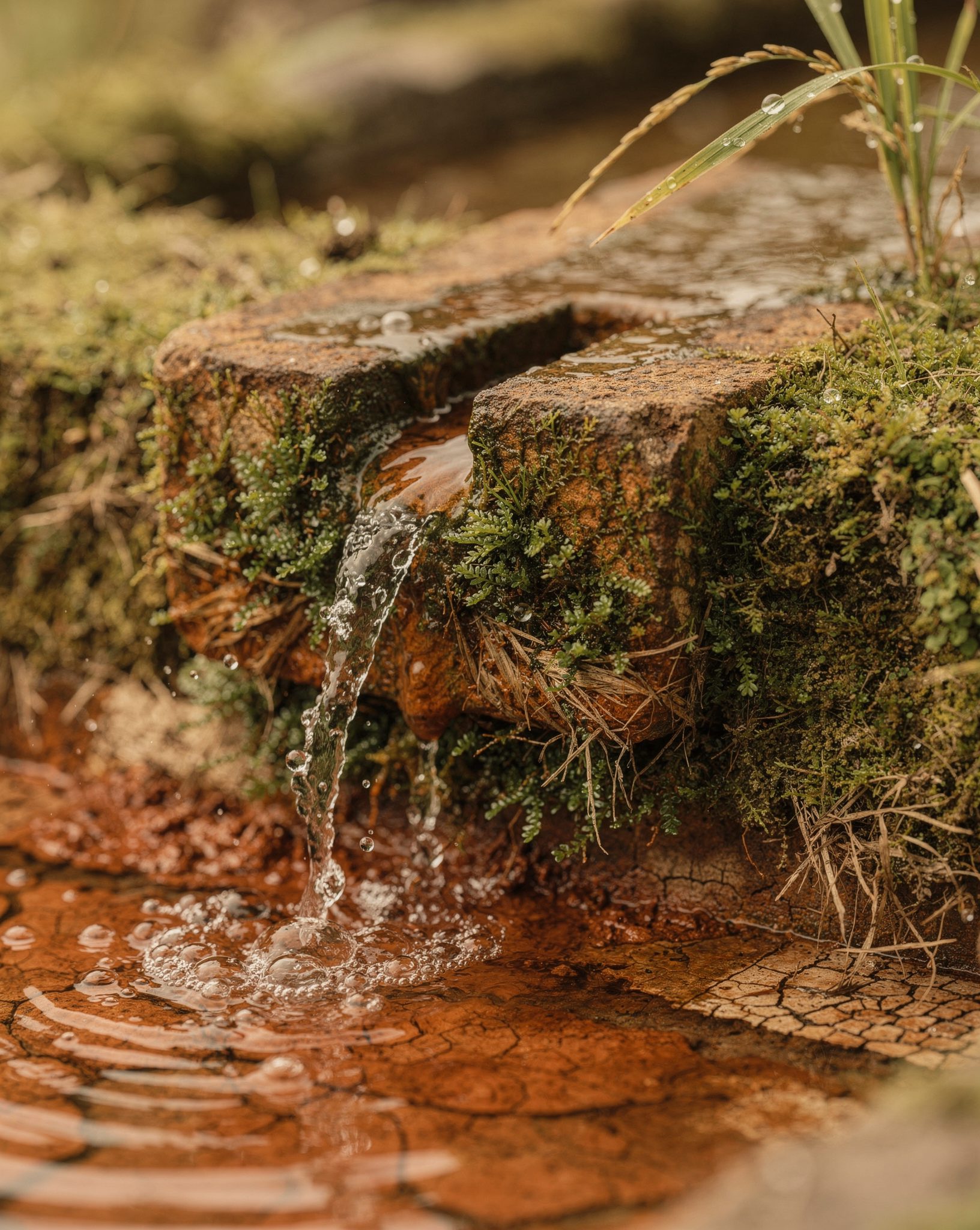
This is the detail almost every visitor walks past. Look for worn, hand-cut stones at channel junctions along the terrace walls, often mossy and unmarked.
Why proportional sharing matters
A pipe with a valve can be closed at night by whoever controls it. A notch cannot be quietly cheated. Transparency is built into the hardware.
Wonder 3: The Flooded Mirror
Flooding a paddy is not decoration. Standing water controls weeds, stabilizes soil temperature and moves nutrients through the field.
It also creates a scheduling problem. Because each terrace releases water to the one below, an entire valley cannot demand water at the same moment.
The solution is staggered planting across the slope. That is why Bali’s rice terraces look like a patchwork of different greens, browns and mirrors in a single frame.
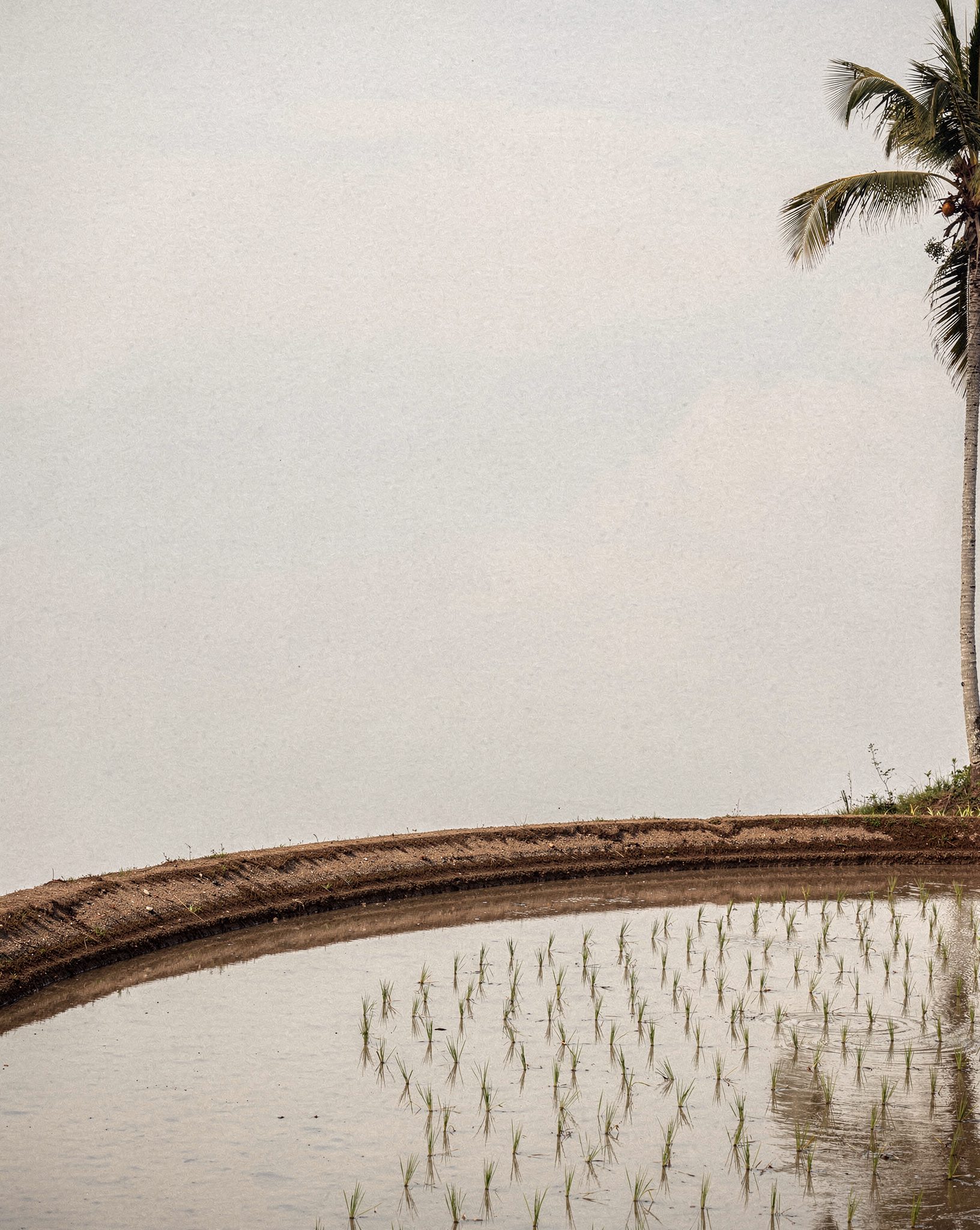
Timing tip: visit just after transplanting, when the levels are freshly flooded and the young seedlings are still short. The terraces become giant mirrors reflecting sky and palm silhouettes.
Wonder 4: Weirs, Bamboo Flumes and Rock Tunnels
Upstream is where the system gets physically impressive. Water is captured by simple weirs and led away through hand-dug canals, bamboo flumes and tunnels carved through solid volcanic rock.
Some of these routes have been maintained by farming cooperatives for centuries. Maintenance is the real technology here — a canal that nobody clears becomes a landslide.
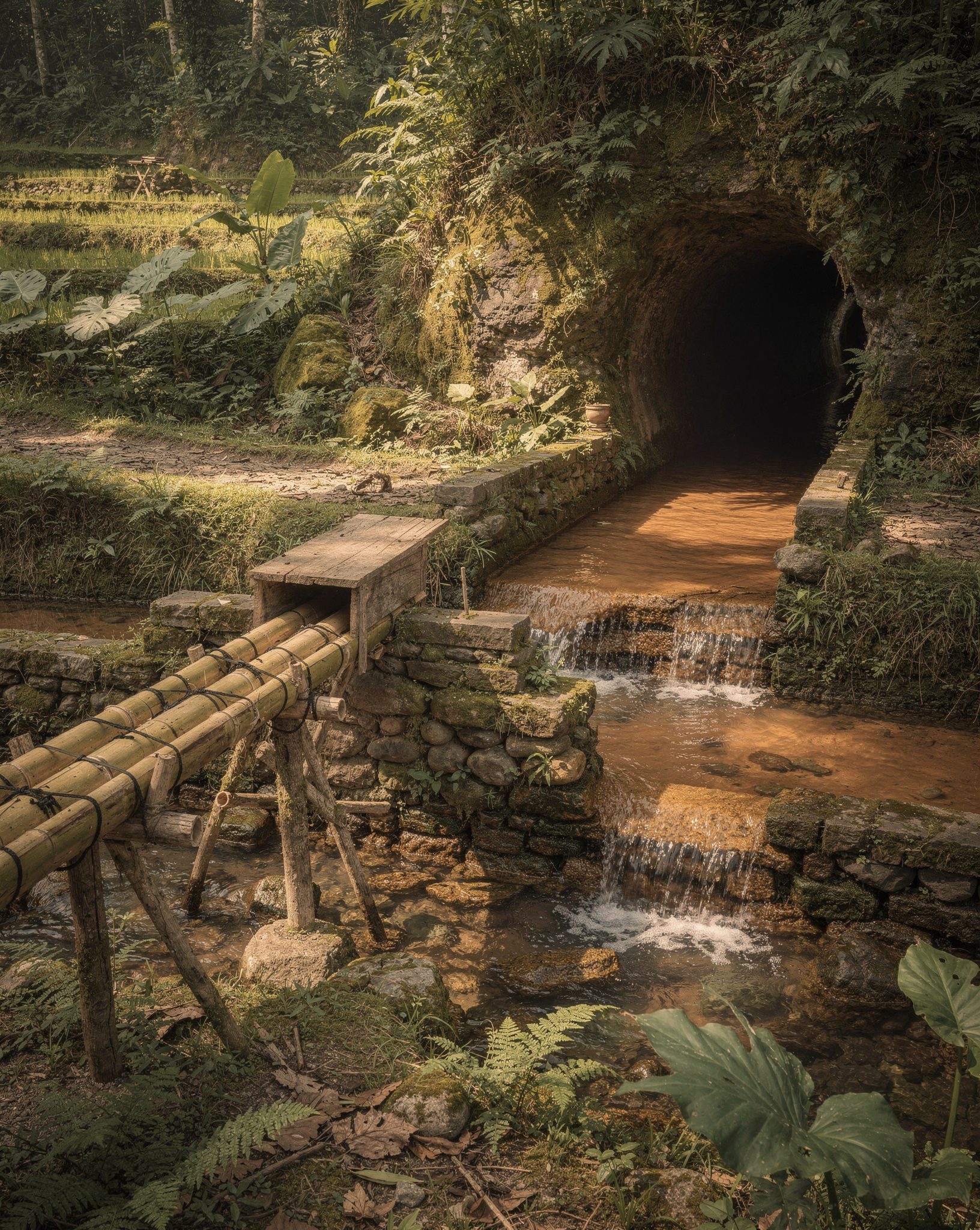
The trails around Jatiluwih in Tabanan are among the easiest places to see these channels up close. You can often walk beside a running canal for several hundred metres and watch it work.
Trail etiquette that actually matters
- Walk on the bunds farmers are already using, not across young seedlings
- Never move stones, block a channel or dam water for a photo
- Step aside for anyone carrying tools or harvest
- Ask before photographing people at close range
Wonder 5: Golden Hour on the Contours
Late afternoon is the best light for the terraces. A low sun turns the contour bunds into glowing lines and the flooded levels into sheets of copper.
It is also the calmest time to understand what you are seeing. The shadows reveal every level change, so the descending logic of the water becomes obvious.
Subak endures for a reason that has little to do with stone. It shares a scarce resource by agreement rather than by force — an expression of Tri Hita Karana, the philosophy of harmony between people, nature and the spiritual world.
Go slowly, follow the water, and you read a thousand years of engineering in an hour’s walk.
How to Plan a Subak Walk
You do not need a technical background, and you do not need to hike far. You need time and a willingness to look down as often as you look out.
A simple approach that works:
- Arrive mid-to-late afternoon for the best contour light
- Start high so you can watch water descend rather than guess where it came from
- Find one channel split and study the notched stone before moving on
- Wear shoes with grip — bunds are narrow, and wet clay is slippery
- Bring cash for local access and parking fees where they apply
Key Takeaways
Bali’s subak is a gravity irrigation system, a farming institution and a UNESCO cultural landscape all at once. The hardware is modest; the coordination is extraordinary.
Remember these five things when you visit:
- Everything flows by gravity, from mountain stream to the lowest paddy
- Notched tembuku stones split flow in fixed, agreed proportions
- Flooding manages weeds, soil temperature and nutrients — not aesthetics
- Weirs, bamboo flumes and rock-cut tunnels carry water upstream, unpumped
- Late light and slow walking reveal the design better than any viewpoint sign
The rice terraces of Bali are beautiful. The reason they exist is better.