Digital Wellness for Teens: 5 Surreal AI Art Visions
What is the glow of a screen truly doing to a young mind? It’s a question that lingers just beyond the edge of every notification, every late-night scroll, every silent room lit only by blue light. In this surreal art series, AI Guardians of Youth, we explore digital wellness for teens not as a lecture or a list of rules, but as a dreamlike visual journey — a monochromatic meditation on the quiet battle between screen-glow and inner calm.
Rendered in a single family of cool indigo-blue tones, these five conceptual images reimagine what it feels like to grow up inside a world of endless screens. Each frame is a step deeper into the surreal truth — and an invitation for teens, parents, and educators to pause and reconsider our relationship with technology.
The Series: Five Visions of Digital Wellness
This surreal art series uses restraint as its language. There are no bright colors competing for attention, no chaotic collages — only a sophisticated, museum-quality stillness that mirrors the very calm it hopes to inspire. In an age of visual overload, the quietness is the message.
Vision One: The Cold Glow
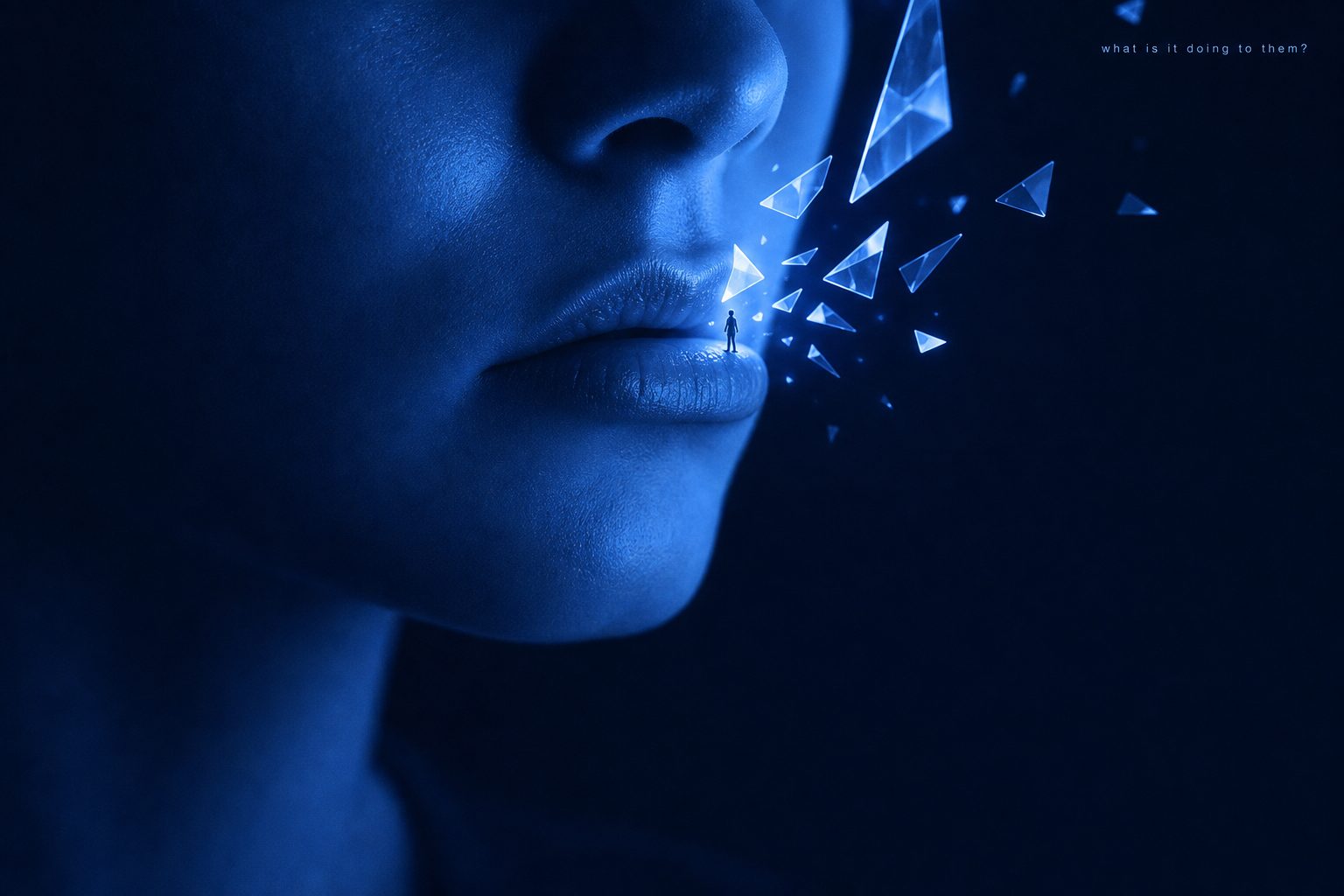
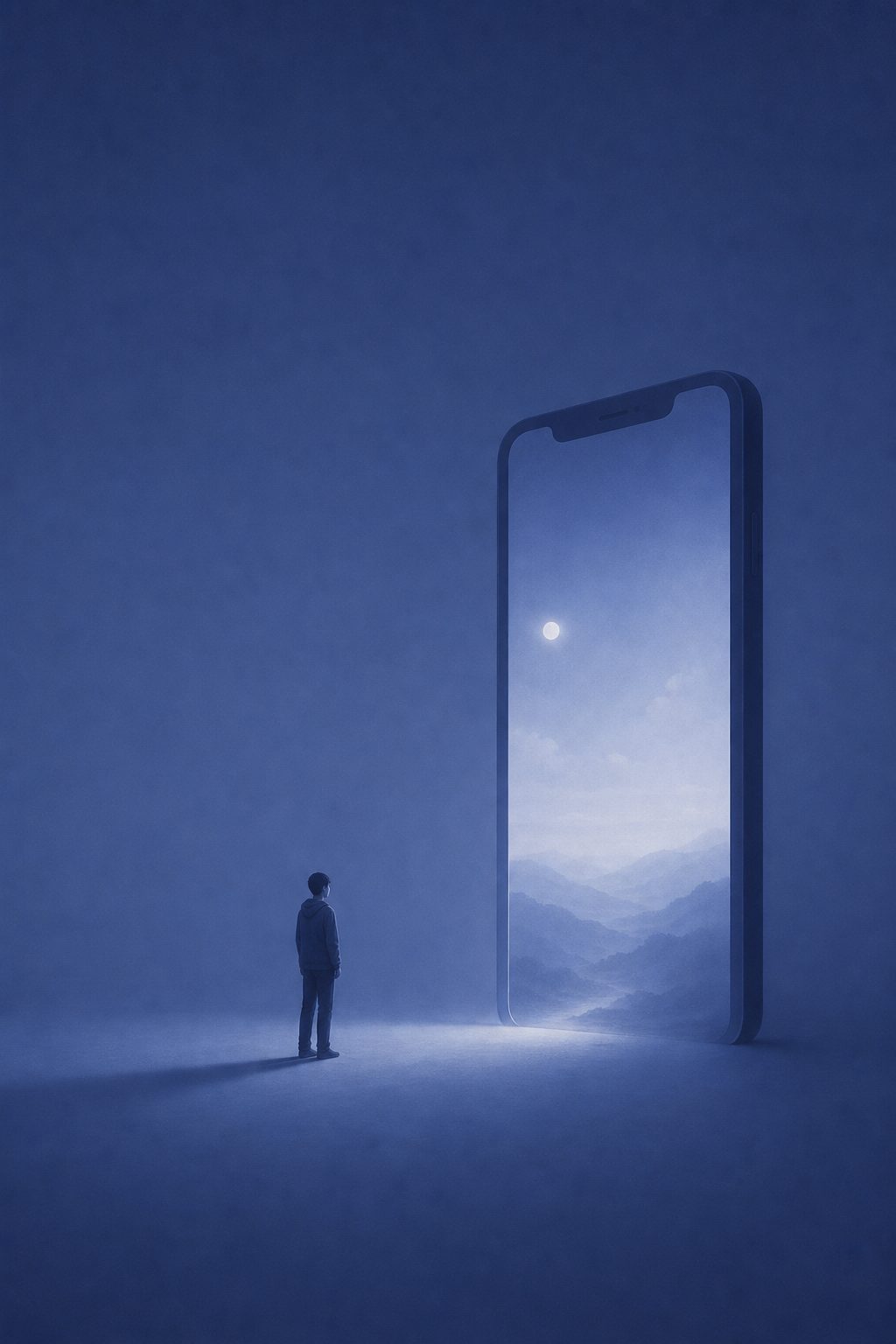
The journey begins with a single, unsettling image: a cold glow, a tiny figure, and a question left unanswered. This is the hook — the moment before understanding. It captures the isolation that can come from too much teen screen time, when the light of a device becomes brighter than the world around it.
Vision Two: The Scale of It All
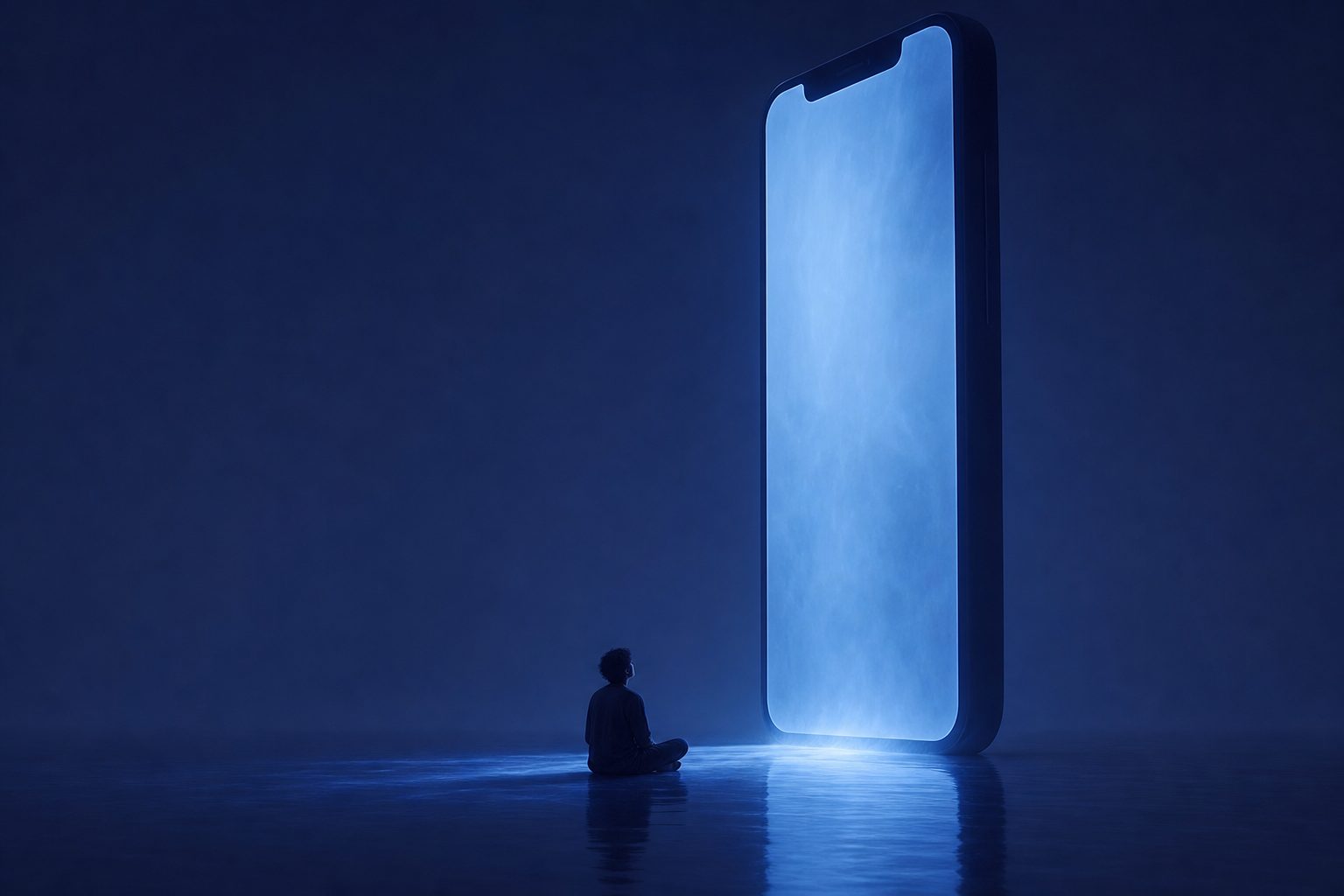
Here the full scene emerges: one small human dwarfed by one towering screen. The composition is deliberate — the scale reveals just how much digital life can loom over adolescence. It’s not a condemnation of technology, but an honest acknowledgment of its size in a young person’s daily experience.
This visual tension is the heart of the conversation around digital wellness for teens. Screens aren’t inherently harmful, but their presence is enormous. Recognizing that scale is the first step toward balance.
The Tools of Balance
If the first images name the problem, the next distills the solution into something you can almost hold in your hands.
Vision Three: Instruments of Calm
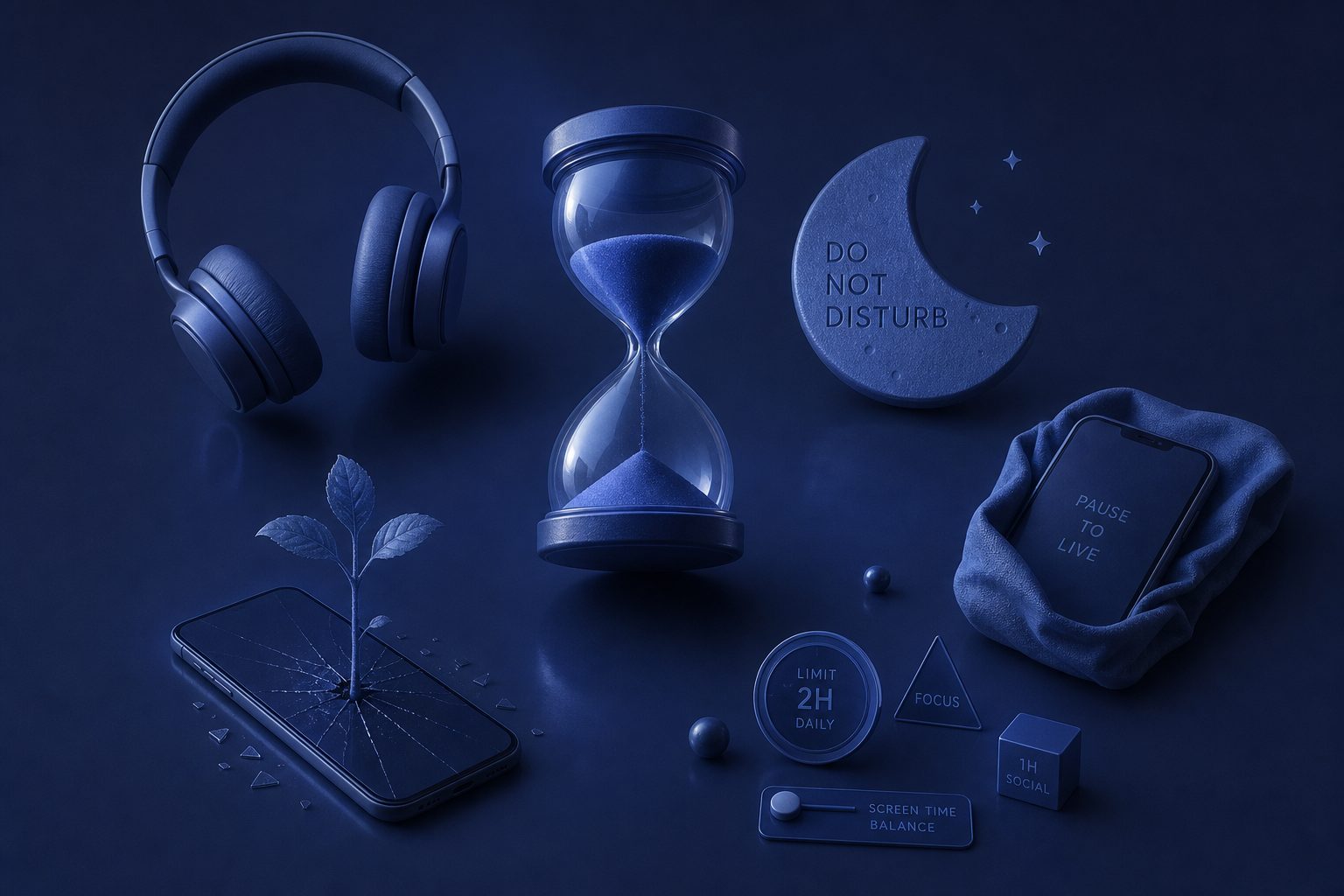
Arranged like relics in a museum case, the instruments of balance appear: an hourglass, a sleeping phone, a plant growing through a screen. Each object holds a piece of the answer.
- The hourglass — a reminder that time spent is time chosen, encouraging mindful attention to how hours pass.
- The sleeping phone — the simple, radical act of a digital detox for teens, letting the device rest so the mind can wake.
- The plant through the screen — life finding its way through technology, a symbol of mindful technology that serves growth rather than stalling it.
These are not gadgets or apps. They are metaphors — surreal reminders that wellness begins with intention, not with the latest tool.
The Turning Point
Every meaningful story has a moment of release. In this series, it arrives as the phone dissolves.
Vision Four: Birds in Flight
The mind still needs room to breathe. In this climactic image, the phone dissolves into birds taking flight — a surreal reminder that freedom begins the moment we look up. The negative space around the birds is intentional, offering the eye rest and the imagination a place to wander.
This is the emotional core of digital detox for teens: not deprivation, but liberation. When we set the device down, attention scatters upward and outward, reconnecting with the physical world, with quiet, with the sky.
An Awakened Future
The series closes not with darkness, but with dawn.
Vision Five: The Blue Hour
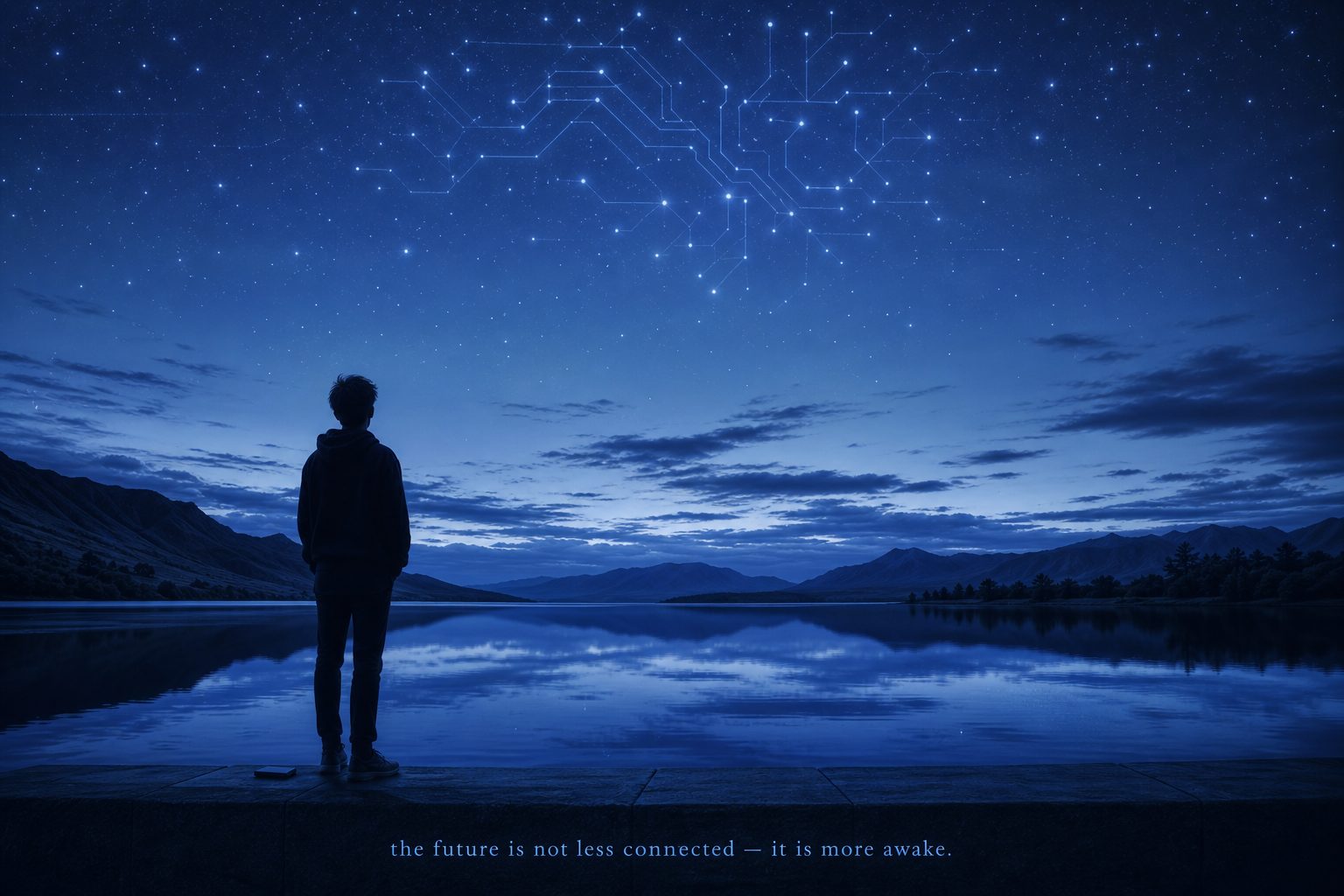
At the blue hour, the phone rests and the sky awakens. The accompanying idea captures everything the series stands for: “The future is not less connected — it is more awake.”
This is the reframe at the center of future tech art. Technology is not the enemy of youth, and disconnection is not the goal. The vision here is a future where connection and presence coexist — where a teen can use a device intentionally and then look up, fully awake to the world around them.
Why Surreal Art Speaks to Digital Wellness
Statistics and warnings often slide off the surface of a busy mind. Art works differently. By translating the abstract idea of mindful technology into dreamlike imagery, this series bypasses defensiveness and speaks directly to feeling.
The monochromatic indigo palette is more than an aesthetic choice. It creates a unified emotional space — cool, calm, and contemplative — that stands in quiet contrast to the frantic, oversaturated visuals that dominate most screens. In this way, the medium itself models the message of digital wellness.
For Teens
You don’t have to abandon your devices to reclaim your attention. Balance looks like small choices: a phone that sleeps at night, an hour that belongs to you, a moment spent looking up.
For Parents and Educators
Conversations about teen screen time land better through curiosity than control. Sharing imagery like this can open a dialogue about how technology feels, not just how much it’s used.
Conclusion: Look Up
The AI Guardians of Youth series doesn’t ask us to fear the future or reject the tools that shape it. Instead, it invites a gentler, wiser relationship with technology — one where the glow of a screen no longer outshines the light of the world beyond it.
Digital wellness for teens isn’t about turning everything off. It’s about waking up. So the next time the screen pulls your gaze downward, remember the birds taking flight and the sky at the blue hour. Save this reminder, and share it with a teen who needs to look up.